
President Donald Trump took a swing at fisheries policy two weeks back week and, in the process, demonstrated just how far rhetoric can drift from reality once it leaves the dock. Admittedly the Pres has a lot more than fisheries on his mind these days, but just for the record:
In remarks announcing the reopening of several large protected offshore areas to commercial fishing—in itself no bad thing in most areas--Trump claimed those waters had effectively been “given away” to foreign fishermen by previous U.S. administrations and that U.S. seafood consumers—lobster lovers in particular—were paying the price because American waters were supposedly locked up.
Neither claim survives even a cursory look at how fisheries management actually works in the United States.
Those offshore areas were not being “fished by foreigners.” They were closed by U.S. proclamation and regulation, meaning no one—foreign or domestic—was legally harvesting fish inside them. Outside the lines, yes, international fleets operate on the high seas under regional fishery management organizations. Inside U.S. monuments and reserves, fishing pressure went to zero by design. That was the point.
The lobster claim was just simply untethered. The American lobster fishery remains one of the most productive and heavily regulated in the world. U.S. waters from Maine southward are not closed to lobster fishing; they are worked intensively under trap limits, size rules, v-notching, escape vents, and seasonal controls refined over decades.
There are so many U.S. lobster traps in the water in many areas along the northeast coast that navigation is a crapshoot due to the tens of thousands of tethered buoys marking their location, and every seaside village has local lobster for sale in restaurants and roadside stands.
Canadian lobster shows up in U.S. markets because Canada also has a massive fishery and because seafood trade between the two countries is deeply integrated, not because American lobstermen have been fenced out of their own grounds. (Warming coastal waters—definitely happening no matter what we think overall about “global warming”—is moving a lot of the lobster population further north, however. Eventually a lot of that population is going to be on Canada’s side of the line, a problem for future generations of lobster harvesters to sort out.)
What Trump’s comments revealed is a recurring problem in fisheries politics: the conflation of access with abundance, and closures with failure. Modern U.S. fisheries management—overseen by NOAA Fisheries and regional councils—does not operate on the simplistic idea that more water automatically equals more fish. It operates on stock assessments, rebuilding timelines, bycatch thresholds, habitat protection, and long-term yield. That framework has rebuilt dozens of once-depleted stocks and kept many more from collapsing. It is also why American commercial fisheries are widely regarded as among the best-managed on the planet.
That doesn’t mean every closure was perfect, or even necessary.
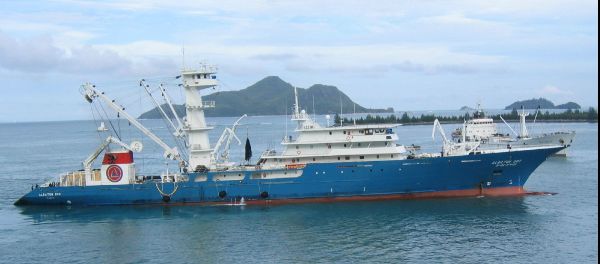
Some of the offshore areas now being reopened were vast, remote, and lightly fished even before protections were imposed. For highly migratory species like tuna and swordfish, a line on a map offers limited biological benefit when those fish cross entire oceans.
From the perspective of U.S. commercial fishermen, especially longliners and pelagic fleets, reopening these zones restores access that never clearly threatened the resource to begin with. It may also reduce pressure to push farther offshore into less regulated international waters, where enforcement is uneven and conservation outcomes are often worse.
There is also a legitimate argument that blanket monument-style closures sidelined fishermen without fully integrating them into the conservation conversation. Fisheries management works best when those who make a living on the water have buy-in, not when decisions feel imposed from above with little regard for economic reality or operational nuance.
But there is another side of this ledger, and it matters just as much.
Some of the reopened areas protected habitats that recover slowly or not at all once damaged—deepwater corals, seamount ecosystems, canyon walls shaped over millennia. These places are not interchangeable with open shelf waters. Even limited commercial activity can leave marks that last far longer than a political cycle. Removing protections without a clear, science-based replacement risks trading durable conservation gains for short-term access.
A discussion might better have acknowledged that some monument closures were blunt instruments, that adaptive management might serve both fishermen and fish better, and that reopening certain areas could be done cautiously, with gear limits, monitoring, and trigger points tied to stock health. Instead, the speech leaned on false premises: foreigners stealing fish, Americans locked out, consumers shortchanged by regulation.
That framing may play well politically, but it does nothing to improve fisheries outcomes. U.S. fisheries are not struggling because managers forgot to let Americans fish. They are navigating a far more complicated landscape shaped by changes in the fisheries themselves, global markets, ecological limits, and decades of hard-won regulatory progress.
The reopened areas may yield benefits for some fleets and regions. They may also erode protections that were doing quiet, valuable work beneath the surface. Both can be true at once. What isn’t true is the notion that U.S. fisheries management has been some grand act of self-sabotage finally corrected by reopening lines on a chart.
If the goal is stronger domestic fisheries, the path forward is careful, transparent management grounded in science, economics, and accurate, honest input from working fishermen.
Sometimes it’s simply better to take the win and hold the comments, but that has proven to be challenging at times for this administration. In any case, the changes will benefit U.S. fish harvesters and consumers in the short term, and if the take is too great, it’s likely future administrations will put any needed regulations back in place.
– Frank Sargeant, Editor, The Water Wire
Frankmako1@gmail.com