
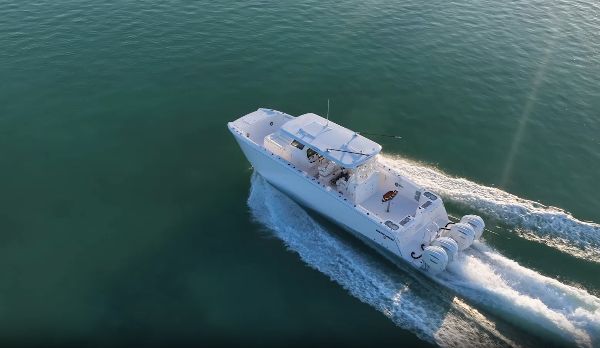
The boating season is back in full swing nationwide despite a soggy Memorial Day in much of the U.S. east of the Mississippi, and with it the usual cautions that go with fishing and “messing about in boats”.
I often wind up fishing alone, and I usually prefer it that way. No schedules to coordinate, no debates over which spot to hit first or why we should try another spot 10 miles down the lake, and no extra deadline on when we have to get back.
From what I see on the water these days, that’s the way many of us fish, at least in fresh water.
But fishing and boating solo comes with some added risk. If you go overboard, the only person who might be able to help you is already in the water.
If you’re old, overweight or in bad shape—or if you experience a medical emergency or an injury as you fall—you may not be able to get back aboard without help.
And if the boat is in gear—as when you’re trolling—it may leave you behind.
First responders nationwide report that one of the more common causes of a fall overboard for guys is taking a whiz off the transom. That and landing fish both are moments when a bit of inattention can put you in the water—be forewarned.
And of course, anyone on the bow of a bassboat or flats skiff is always just one step away from being in the water.
That’s why wearing an inflatable PFD is always a good idea. A simple belt-style device which offers no movement restriction or discomfort at all is all it takes. Your family and your insurance man will thank you.
Reboarding a Stationary Boat
If the boat is at anchor, drifting slowly or spot-locked with your trolling motor, getting back aboard is simplified—go to the transom, pull down the boarding ladder and climb back in.
If your boat doesn’t have a boarding ladder, now is the time to get one, pronto, because unless you’re young and fit, you’ll find getting back aboard most boats is a real challenge without that help.
The only cure for this is not falling over in the first place, so be forewarned
From a Moving Boat
If the boat is underway and you fall out, you’re in a lot more dangerous situation. First, it may simply chug off and leave you behind. Note that your electric trolling motor can do this, too, if it has one of the very handy GPS course-tracking systems in operation.
Wind and current can also make a boat impossible to catch up with when you’re in the water.
Even more dangerous—though a lot less likely—is that you get thrown out of the boat while it’s on plane. If this happens—usually result of hitting a log, stump or rock at speed but sometimes because the steering system fails—outboard-powered boats will sometimes start circling—which means they’ll come right back around where you’re treading water and might very well run you over!
Of course, if you wear the safety cutoff lanyard that is provided in most boats, the engine will stop if you get more than a couple feet from the helm.
But almost nobody wears that lanyard, particularly if they are fishing, because you will constantly be moving around the boat from bow to stern. So that safety device is basically rendered moot.
Wireless Cutoffs to the Rescue
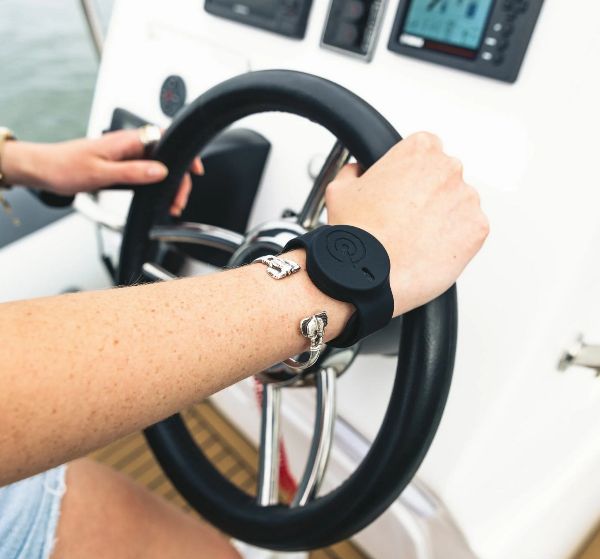
Wireless engine cutoff systems were developed to address those limitations. Instead of a physical tether, these systems rely on a small transmitter worn by the operator and a receiver installed at the helm or on the main battery. If the transmitter moves beyond a preset range, the engine shuts down automatically. The engine stops—and hopefully you can quickly get back aboard.
The most dependable systems designed specifically for marine use run about $230 up—but within the last year or so, inexpensive knockoffs have become available at under $30 bucks from Walmart, Amazon and other sources.
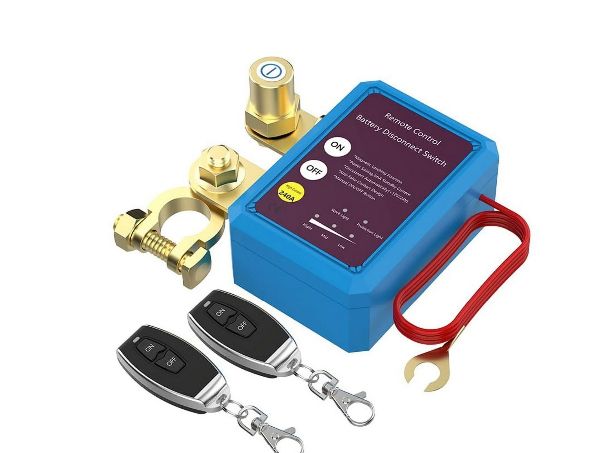
While these devices are not as sturdily built as more expensive units, they appear to be adequate for the protected inland waters I mostly fish these days. And the inexpensive device you actually have is always more likely to save you than the $400 system you meant to buy someday but couldn’t quite afford.
If you fish coastal waters offshore, much more robust protections are in order, including a wearable Personal Locator Beacon (PLB) clipped to your shirt—out there, it truly is life and death. An Emergency Position Indicating Rescue Beacon or EPIRB for the boat is also a must—together, these devices cost far less than a tank of gas for an offshore boat.
Your cellphone in a waterproof case on your belt is another safety measure—inland or near shore, it can quickly alert rescue agencies, though it likely won’t have the reach offshore.
Odds are with a bit of caution can enjoy the solitude of boating and fishing on your own safely for as long as you’re physically capable. But there’s always the need for basic awareness and good seamanship to assure you come back exactly as many times as you go out.
– Frank Sargeant, Editor of The Water Wire
Frankmako1@gmail.com