
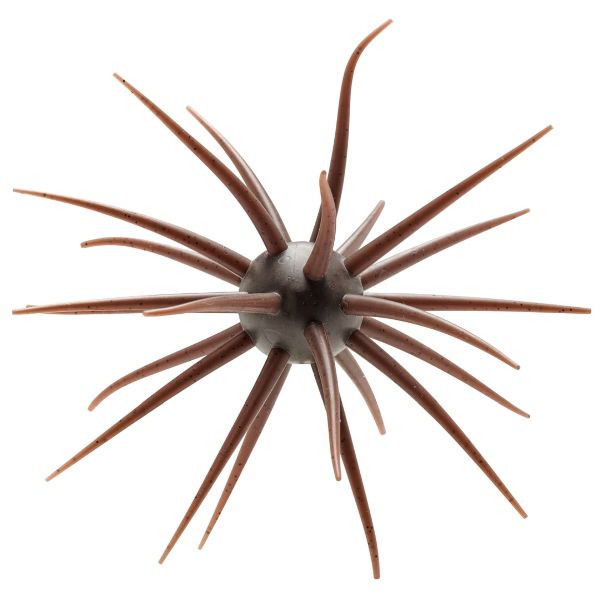
Weird can sometimes be wonderful. If you tried to think of a lure more unlikely to entice gamefish than a “fuzzy dice” or Coike type lure, you’d no doubt find it a challenge—they look like nothing that lives in fresh water. The nearest living thing might be an octopus from the sea—or perhaps a giant virus come to life in the lake.
But, as is often the case, bass are the final judges. And if it’s stupid but it works, it ain’t stupid.
At the just completed Bassmaster Elite Series event on South Carolina’s sprawling Santee Cooper Lakes, Canadian pro Chris Johnston powered his way to victory in a field stacked with top talent. The headline wasn’t just the weight — a hefty 113-pound, 12-ounce four-day total — it was how many of those bass were caught: on a Coike-style lure.
Not only that, but second-place Brandon Palaniuk also relied heavily on these weird but wonderful lures.
For anglers who haven’t yet embraced these oddball offerings, the success at Santee Cooper is more than a curiosity — it’s a signal that the bass world is evolving, and what would appear to be the magic mushroom dream of a lure maker is now legitimate, proven tournament hardware.
What Are Fuzzy Dice and Coike-Style Lures?
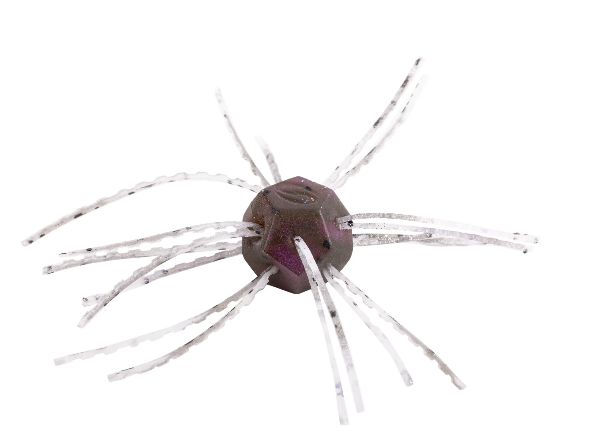
At first glance, these baits look like nothing a bass would naturally encounter. Imagine a small block or sphere of soft plastic with strands of silicone or rubber protruding in all directions — fuzzy, spiky, and frankly bizarre compared with the usual suspects like worms, craws, bluegill and shad imitations.
In Japan’s highly pressured bass waters, these designs have been a mainstay for years; now U.S. anglers are finally taking notice as they prove capable of tempting bites tougher presentations can’t.
Often called “dice baits” or “fuzzy baits”, these lures come in a variety of shapes and materials. The classic style — popularized by the OSP Saikoro Dice Rubber — looks like a miniature cube with silicone skirt material pulled through it in multiple directions. Other offerings, like the Hideup Coike series, are more spherical or sea-urchin like, with molded-in soft spines radiating from a central core.
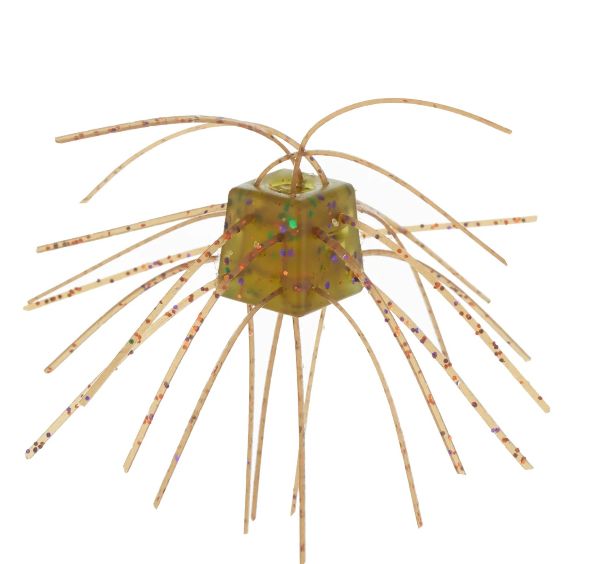
What unites them all is their unconventional profile. They don’t imitate shad, crawfish, worms, or any familiar forage item. Instead, underwater they produce a mass of subtle movement: fluttering strands that drift and pulse even with minimal rod tip action. It’s this texture and ambiguity that seems to trigger strikes from bass — especially fish that have seen every other bait in the box.
Different From “Natural” Lures — But Effective
One of the biggest questions anglers have about fuzzy dice and Coike-style lures is why bass eat them at all. They don’t resemble anything in the forage catalog — no realistic shad profile, no craw silhouette, no segmented body or discernible tail.
Instead of mimicking a specific critter, these baits create a totally new silhouette and a mass of tiny movements that bass key in on. The strands and spines flutter and pulse, creating subtle water displacement and micro-vibrations that pique a bass’s curiosity or trigger a reaction bite. They seem to work particularly well in hard-fished lakes where the fish already know the name and model number of every commonly used bass lure.
It’s a concept not entirely alien — spinnerbait skirts, jig trailers, and soft plastic flukes all rely on movement and vibration rather than strict realism — but dice and Coike baits take it to an extreme. When fish are pressured or conditioned to avoid familiar shapes, something truly different apparently can be the thing that draws a strike.
How to Fish Fuzzy/Coike Lures
Fishing these lures is all about finesse and subtle presentation — speed isn’t the ticket here. The general idea is to let the lure sink slowly, give it minimal movement, and let those strands do the talking.
Because the bodies can be bulky, traditional Texas rigs aren’t the go-to choice; instead, finesse setups with fully exposed hooks are the ticket. The hooks are guarded from snags by the “arms’ of the bait, so weedless rigging is usually not necessary.
The top anglers in the Elite event at Santee Cooper appeared to be fishing the Coike lures with what would be called a wacky or Neko rig in a worm, that is a small nail weight in the center, along with a large hook cradling the center of the bait.
This is cast near cover, allowed to slowly drift to bottom, then twitched up with the rod, then allowed to sink again and so on. Strikes are subtle, often only a slight tap or a slacking of the line.
Some anglers also fish the baits with a drop shot, which works well in deeper water where the bait can be sent to bottom quickly with a sizeable weight on the dropper, then twitched and shook in place until the fish can’t stand it.
The key with these lures is patience. These lures come alive with the slightest motion, and bass often hit them on the fall or during a slight twitch rather than a hard strip.
They are, however, “slow” baits—that is, they’re not good for prospecting a new lake where you want to move rapidly to find fish concentrations before you slow down and try to entice the fish that you’ve located. Crank baits and blade baits remain the ticket for most anglers in that venue.
When They Shine
Fuzzy and Coike-style lures seem to excel in situations where bass are cautious — pressured lakes, clear water, or times when fish have seen every typical bait imaginable. They could also show up well on forward-facing sonar presentations, where slow fall and sustained presence in the strike zone matter a lot.
The lures are expensive as soft plastics go, currently at $15 to $20 for the well-known brands. That’s a lot for a lure that may only last through 5 to 10 fish or so. Of course, for tournament anglers this is a cost of doing business, but for us weekend warriors, it can get pricey in a hurry.
However, that has not stopped us weekend warriors from buying whatever is “hot” in the past, and it won’t with these lures, either—and for right now, fuzzy dice and Coike lures are definitely having a moment.
– Frank Sargeant, Editor of The Water Wire
Frankmako1@gmail.com