
There’s a tipping point when something “new” becomes“established” it can also define the time when a new way supplants the previous (old) way of doing things.
If what I’ve noticed on the trails in my area are indicative of a tipping point, the era of the eBike isn’t imminent, it’s here. Three years ago, the Quietkat in the rack of our RV was guaranteed to start conversation wherever we stopped.
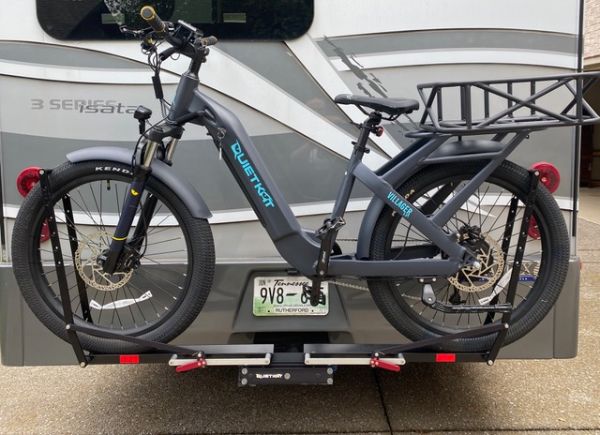
Today, the more common question is “why a step-over versus a step-through model?”
The idea of having an eBike is accepted. It’s the mount/dismount style that spurs conversation. It’s a valid point. The big bike Quietkat is heavier, harder to mount/dismount and almost too-fast for campground use. The more sedate step-throughs are more suitable. Like the difference between a golf car and a high-power ATV.
Trail riders love it. With big tires, a beefy suspension and strong motor, it’s more at home zipping along trails than puttering around campgrounds, despite it’s “Villager” moniker. Unlike some, this kat has been ridden-hard around deer camp, zipping quietly to hunting blinds, even pulled a sheet of polyethylene (holding a harvested doe) back to camp for cleaning.
The day of the electric outdoors-man (or -woman) has arrived. Depending on who you ask, we’re either at- or beyond- the tipping point.
If you doubt that, you only need look at the development announcements from major bike brands.
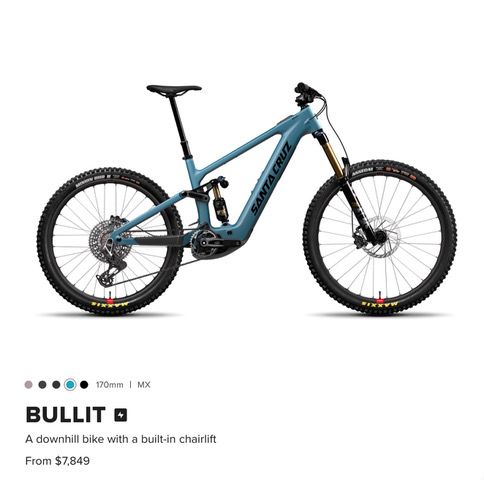
Santa Cruz Bikes says it’s likely to sell more eMTBs than pedal bikes (They call their “Bullitt” a “downhill bike with a built-in chairlift”). Cannondale has more eMTBs in development than analog. Senior Cannondale global marketing managers say in the not-too-distant future “analog will have it’s place” but only for “specific use cases.” Think cross-country races and downhill categories.
Not everyone in the bike community agrees. Some hate the eBike. Others claim they cause more damage to trails, primarily based on the fact that these bikes do make it possible to cover more distance than cranking.
But they’re popular for good reasons.
They enable riders to keep up with their friends when they can’t using “analog” bikes.
They enable people who are unable to ride otherwise to keep going.
And, like motorcycles, boats and other recreational transportation, the community of like-minded companions is a big reason people enjoy them.
Electric bikes first appeared on trails a decade ago. They were a bit goofy-looking with bolt on motors and batteries.
Todays offerings are difficult to distinguish from “regular” bikes if you don’t know where to look. And they’re accepted on most trails.
The industry, always looking to do a little trend-spotting, is looking at other areas where electrification might work.
There are electronic touring skis, hiking pants with powered exoskeleton, even an electronic tow rope for backcountry skiing.
And solar panels are being blended into clothing, enabling you to keep devices charged when you’re wandering the outdoors.
In the not-too-distant future, backcountry enthusiasts (with the financial means) can leave their solar powered tents felling confident their solar clothing won’t allow their devices to fully discharge during their time outside. Their tent will continue charging their portable power station, keeping their basecamp comfy while they’re gone. It’s also powering their wireless security cameras and StarLink, so they’ll see quickly if there’s anything amiss.
If there’s a problem they can’t resolve by turning on the lights and the (optional) siren, they can quickly send a kill message to each device, rendering them useless if stolen.
There may be one fatal flaw in this version of the outdoors.
While you may be comfortable, you’ll never be “disconnected.” Going off-grid and analog has always been one of the prime attractants for many of us.
We’ll keep you posted.
—Jim Shepherd