
My freezer has a generous portion of a back strap from a Kansas whitetail in the meat drawer. It’s wrapped in white butcher paper, rather nondescript save for the black ink that tells what is swaddled within.
The venison was a gift, a gesture of goodwill from a dear neighbor who had the good fortune to harvest a nice buck with his child. It could be a gesture of sympathy given my family has lived through a dearth of big game tags the last couple of years.
Beyond gestures, real or perceived, this is fact: hunters commonly share the bounty of the harvest; it’s a custom—a common courtesy, common etiquette. You might say it is coiled in the double-helix of their DNA, perhaps literally so, as a means of communal survival that dates back deeply in time to our hunter-gatherer past.
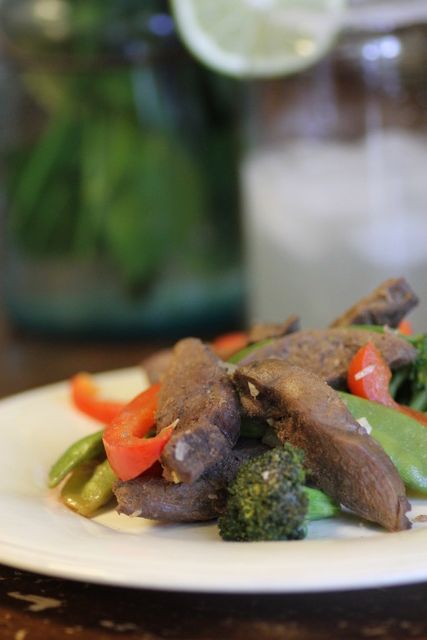
The gift that awaits to be roasted and served to my family is more than naturally sourced free-range meat, it confirms a great American conservation story.
We know that hunters are generous with what they bring home based on data collected and shared via the Wild Harvest Initiative®, an ongoing research program founded in 2014 and led by Conservation Visions, Inc.
During the period 2018 to 2022, Conservation Visions queried resident hunters in Alaska, Arizona, Indiana, Nevada, Texas, and Wyoming regarding their consumption of hunter-harvested meat, and the sharing of that harvest. The data are compelling.
Nearly 98 percent of hunters report sharing meat they had harvested, feeding on average slightly more than two other people in their own household, and up to five more people outside their households. What’s more, hunters shared up to 28 percent of all their harvested meat with others outside their own homes.
When queried about motivations for sharing the harvest, hunters commonly revealed that harvested wildlife was a way to add high-quality nutrient-rich food to the larder; help others in need; or save money, the latter sentiment being more common among low-income hunters, often living in rural areas versus those residing in urban settings or with higher household incomes.
“Hunting isn’t a sideshow,” said Shane Mahoney, CEO of Conservation Visions, Inc. “Hunting is a way of life, both life-giving and life-affirming—the data clearly bear that out. Furthermore, over 80 percent of the public support legal, regulated hunting—a figure dominated by people who do not hunt themselves.”
Many non-hunters are after all recipients of the shared harvest. And there is much to share. According to the Initiative, from 2014 to 2023, American hunters harvested on average each year 56.35 million wild animals yielding 1.6 billion 6-ounce servings of nutrient-rich meat.
Over that period, hunters yearly harvested 5.9 million white-tailed deer yielding 1.048 billion meals. Elk came in a distant second in terms of meals provided; nearly 180,000 harvested elk put nearly 108 million meals on plates, yearly. Winged creatures make good food; 746,000 wild turkey yielded 13.5 million meals and 1.01 million wood ducks turned out a nearly equal number of meals at 1.1 million 6-ounce servings. Forty-six thousand black bears provided 33.9 million meals, annually.
The regulated hunting and harvest of wild animals feeds a great many Americans. But there is another commonality among these species—and a good many others not listed here—and that is the great American story of conservation.
But not for steady and reliable funding from a federal excise tax paid by the manufacturers of firearms, ammunition, and archery gear via the Pittman-Robertson Act, the scientific management and restoration of wild birds and mammals and their habitats, hunting and harvest would not be possible.
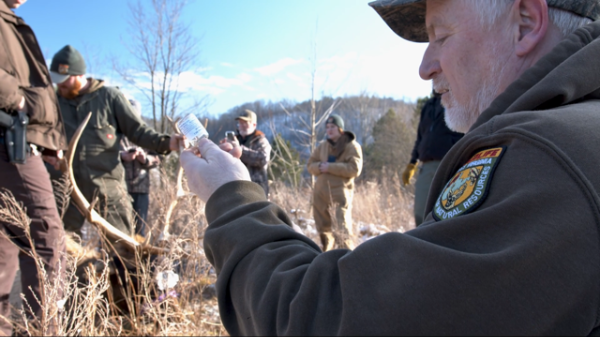
Prior to the passage of the Act in 1937, white-tailed deer were reduced to a mere relict. Elk were decimated, lessened to small clades, if not locally extinct in the vast reaches of the American West. Black bear, native to nearly the entire lower 48, were reduced to an extremely limited range. Today, thanks to successful restoration bears now present a new dilemma of managing their numbers near towns and suburbs.
“The robust populations of wild birds and mammals available for hunter and trapper harvest are directly downstream of reliable conservation funding,” said Tom Decker, a certified wildlife biologist in the U.S. Fish and Wildlife Service. “But not for restoration through the industry-state-federal partnership facilitated by Pittman-Robertson, the status of wildlife and wild places could be dismal today.”
About that back strap in my freezer—under the cold crinkly butcher paper is a two-pound nutrient-rich natural source of food. It is the consequence of visionary leaders in industry and government who nearly 90 years ago saw a way out of the malaise and dismal state of America’s wildlife. A venison roast landing on my family’s dining table affirms life and the goodness of America and its system of conservation funding.
– Craig Springer, for the USFWS - Office of Conservation Investment