
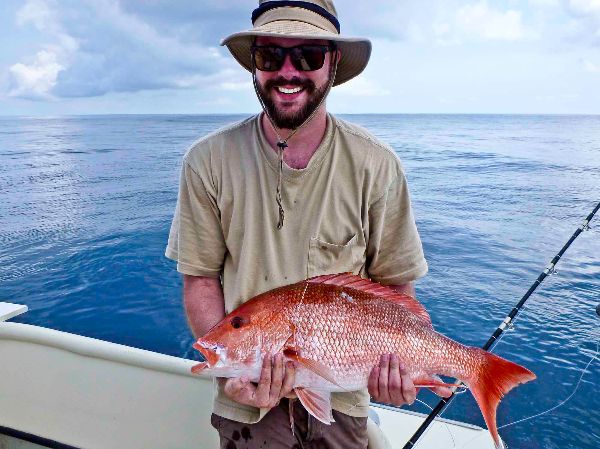
The red snapper fishery in the Gulf of Mexico is one of the longest-running, most intensively managed fisheries in American waters. It’s also the one where management has aggrieved generations of recreational anglers more than any other in salt water.
NOAA reports that commercial harvest of red snapper dates back at least to the 1840s, when fishing activity was concentrated off Pensacola, Florida. Railroad cars of fish on ice headed north weekly.
Surprise! By the late 1800s, fishermen and scientists began noticing depletion off Florida. As nearshore fish declined, vessels pushed farther offshore. U.S. fleets expanded into the Campeche Bank off Mexico, and by the early 1900s commercial landings exceeded 7 million pounds annually. The western Gulf began to see comparable fishing pressure in the 1930s and 1940s, when “snapper banks” were discovered.
The Gulf shrimp fishery also grew dramatically from the 1960s through the 1990s as markets expanded. Shrimping effort more than doubled during that period. Juvenile red snapper are frequently caught in shrimp trawls, and this bycatch of millions of baby fish became a major source of red snapper mortality. The future of the fishery went back over the side dead as “by catch”.
Recreational fishing followed a similar postwar expansion, per NOAA history. Improved outboard motors, fiberglass boats, navigational electronics, and rising coastal tourism fueled growth in private and for-hire fishing. Party boats targeting red snapper became common across the Gulf. Recreational landings climbed from less than 500,000 pounds before 1950 to more than 5 million pounds by the late 1990s. Today, recreational anglers account for more than half of total red snapper removals when discards are included. A lot of released undersized fish die from barotrauma or are eaten by sharks.
The biological consequences were severe. Red snapper abundance declined steadily from about 1950 through the late 1980s as fishing pressure intensified.
Scientists measure stock health in part through “spawning potential ratio”—the ability of the population to produce eggs compared to an unfished stock. By 1990, spawning potential had fallen to roughly 2 percent, a level far below what is needed to sustain the population, estimated at 26 percent.
Too many fish were being removed, both directly through targeted fishing and indirectly through shrimp trawling.
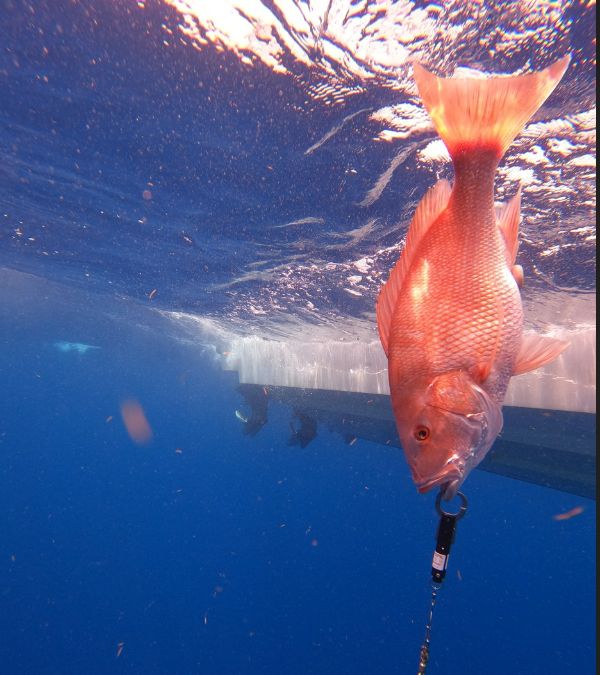
Management efforts began in earnest in the late 1980s and 1990s. Regulators limited seasons, bag limits, minimum sizes, gear types, and the number of participants in both commercial and recreational fisheries. Shrimp trawlers were required to use bycatch reduction devices to limit juvenile snapper mortality. These measures slowed the decline but didn’t reverse it. By 2005, spawning potential had increased only to about 4.7 percent, again per NOAA calculus.
Between 2006 and 2008, recreational bag limits were cut from five fish to two, commercial size limits were adjusted to reduce discard mortality, and an individual fishing quota (IFQ) program was implemented for commercial fishermen. Shrimping effort in critical depths of the western Gulf was capped well below early-2000s levels, with provisions for area closures if effort increased.
Assessments in 2009 and 2013 showed rising abundance and declining fishing mortality. By 2018, scientists concluded the stock was no longer overfished and overfishing was not occurring. Spawning potential had climbed to about 20 percent—significant progress, but still short of the 26 percent rebuilding target.
As quotas increased, another paradox emerged. Recreational seasons grew shorter even as fish became more abundant. The reason was simple: anglers were catching fish faster. Advances in electronics, faster boats with greater range, the expansion of artificial reefs, and a larger population of catchable fish led to sharply higher catch rates. Average fish size also increased, doubling between 2007 and 2013. Managers responded by shortening seasons to keep landings within quotas.
Many state fishery department researchers felt NOAA was grossly underestimating the recovery and pushed for more localized control.
In recent years, management authority has shifted toward state-based approaches. Gulf states now play a larger role in setting seasons for private anglers landing fish in their jurisdictions, including adjacent federal waters. And seasons have become far more liberal.
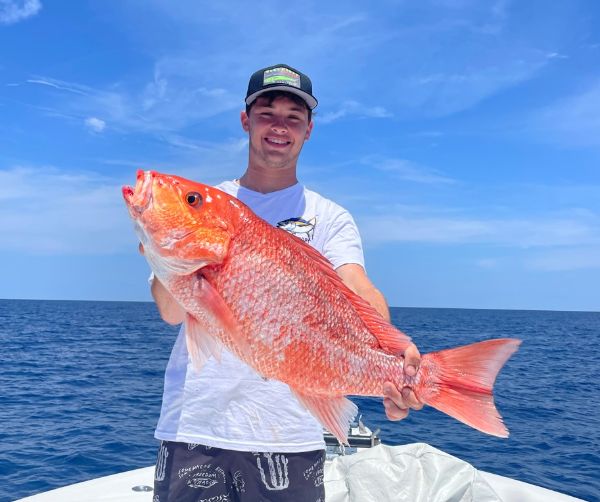
This seems to be working—red snapper fishing for keeper-sized fish is about as good as it gets these days around the gulf. But the rebuilding isn’t finished. Red snapper are long-lived fish, capable of living more than 50 years, and older females produce exponentially more eggs than younger ones. Most fish in today’s population are still relatively young. Continued restraint is aimed not just at increasing numbers, but at restoring a healthier age structure.
An interesting aside—the Gulf shrimp fishery has declined dramatically because the cost of catching wild shrimp here is so much higher than the cost of importing domestically raised shrimp from Asia that there’s virtually no market. More shrimpers are going out of business, so far fewer baby snapper are being incidentally killed. And, with fewer shrimp being harvested, there’s more food left in the Gulf for those surviving snapper.
The Gulf red snapper story is no longer one of collapse, but of recovery under realistic fishery management—and a lot of credit goes to state fishery departments for the push that brought well-intentioned federal over-reach into line. Hopefully, the fishery will continue to thrive, despite the ever-growing pressure of modern technology that makes finding and catching them so much easier.
– Frank Sargeant
Frankmako1@gmail.com