

The final weights told one story at the Bassmaster Classic in Knoxville. The ages told another.
Consider the top five:
Dylan Nutt — 22
Trey McKinney — 19
Yui Aoki — 27
Easton Fothergill — 23
JT Thompkins — 24
That comes out to an average of 23years old. The five best anglers in the biggest event in bass fishing are, on average, just a few years out of college. Trey McKinney is just out of high school—he was the youngest ever to qualify for the Classic. Youth rules, absolutely.
It wasn’t always like this. Tournament fishing used to be a long accumulation of small understandings—seasonal timing, boat position, how fish used a piece of structure at noon versus morning. And of course what lures they eat best at which times and places. Those things came the hard way, and the leaderboards reflected it. Experience showed up as winnings in many of the big events.
Now, being tech savvy is a far bigger advantage than decades on the water.
Modern sonar doesn’t just give us clues as to where fish might be. It shows exactly where they are, how they’re positioned, how they move. The guesswork that once took years to refine has been reduced, if not eliminated, in many situations. A young angler may not have decades of time on the water, but with the right electronics package and knowledge of how to use it, he can watch fish behave in real time and adjust immediately. That kind of feedback changes how quickly someone gets good.
It also favors growing up in the internet age. The top five in Knoxville came up in a world where screens were already part of daily life. The iPhone arrived in 2007. The internet had gone mainstream a decade earlier. For anglers in their early twenties, interpreting a screen isn’t learned behavior—it’s instinct. They’re comfortable reading shifting images, tracking movement, making quick decisions off visual screen cues and converting them to pinpoint casts.
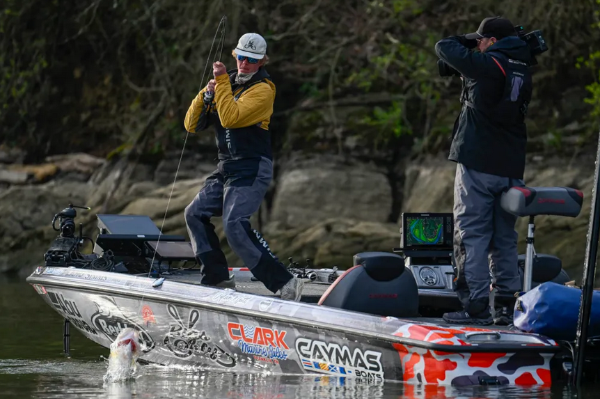
That shows up on the water in how naturally some anglers seem to process what they’re seeing. A fish appears, moves, reacts, disappears. The young guns are instinctive in visualizing the target and putting a bait on it. And they’re totally dedicated to moving fast and often until they come on fish ready to eat.
None of that replaces judgment. Fish still position according to season, weather, current and other factors. The right lures still have to be chosen and presented correctly. But the path to those decisions is shorter when the fish are visible. What used to be guessed at is now observed directly.
Also, the young anglers have almost totally left behind the idea that bass are shoreline fish—except in Florida, and sometimes not even there, most big tournaments are being won offshore with lunker bass that have lived unmolested for generations before the new iterations of live sonar began to scout them out about eight years ago—about when Dylan Nutt was 14.
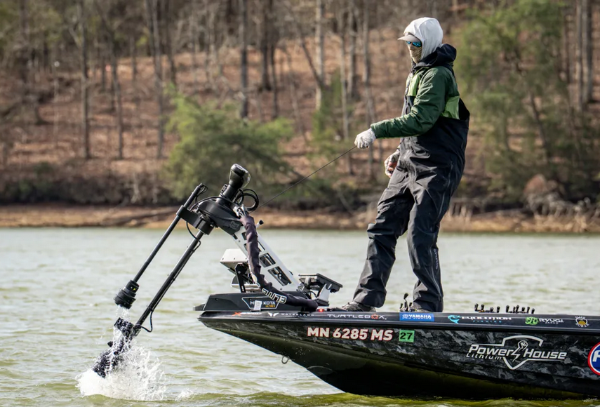
The result is a leaderboard where age no longer tracks with success the way it once did. The advantage has shifted, at least for the present, from accumulated time on the water to information processing abilities—as with so much in our rapidly changing world.
The incredible success of young anglers in the Classic and in most other tournaments where the latest electronics are allowed has brought us leaps and bounds ahead in our knowledge of how bass and other sport fish live. And it has created an amazing boom in the sale of electronics for Garmin, Humminbird and Lowrance.
It has also created more than a little hostility among those of us who can’t pony up five grand or so for the basic live sonar package required to be at all competitive. While the major tournament organizations are constantly tweaking the rules to try to keep traditional tactics in the game, there’s no putting the electronics genie back in the bottle, anymore today than when Darrell Lowrance and his dad Carl cobbled together the first recreational fish finder in their garage in 1957.
– Frank Sargeant
Frankmako1@gmail.com