
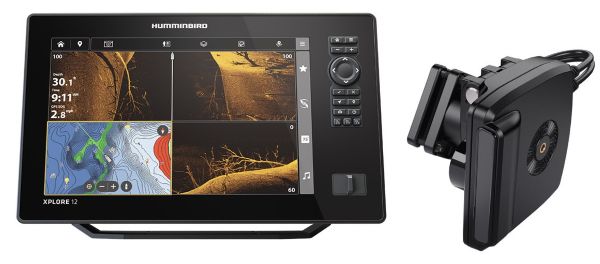
One thing you hear more now, especially on public lakes, isn’t about fish at all. It’s about who can see them.
Forward-facing sonar hasn’t just changed how people fish—it’s quietly sorting anglers into two camps: the ones who have it, and the ones who don’t. And those who don’t are increasingly unhappy with those who do.
That divide has always existed to some degree. Anglers with better boats, better motors, and better electronics have long enjoyed an edge over weekend fishermen scraping by with hand-me-down gear and a thin tackle budget. Fishing has never been perfectly equal.
But forward-facing sonar feels different on the water. This isn’t just about efficiency or comfort. It’s about access to real-time information. One angler is watching fish react to his lure 50 or 60 feet out in front of the boat. The other is fishing memory, instinct, and hope—casting over fish that are effectively invisible to traditional sonar.
What’s changed recently is how fast that gap is both closing . . . and widening at the same time.
When forward-facing sonar first appeared a little over a decade ago, it lived almost exclusively on high-end tournament rigs. You needed a serious boat, robust wiring, and serious money. Most weekend anglers shrugged it off as something “the pros” used.
That’s no longer true. Smaller, less expensive units are showing up on used boats, jon boats, kayaks, and console skiffs. You see transducers clamped to poles, bolted to trolling motors, powered by homemade battery boxes. The price is still high, but it’s no longer unreachable, and there’s a steady supply of used units floating around Marketplace and eBay. Every year, more anglers cross the line from curiosity to ownership.
The “have-nots” are still the majority, but their ranks are shrinking fast.
On the water, the difference is obvious. Boats equipped with forward-facing sonar don’t fish the bank when the bite is offshore. They don’t guess which side of a point the fish are on. They idle—sometimes for long stretches—but when they stop, they stop on fish, and they cast with purpose. Boats without it drift, fan-cast, and move on. Sometimes they catch fish anyway. Sometimes they don’t. And when they don’t, it’s harder than ever not to feel like they’re fishing behind the curve.
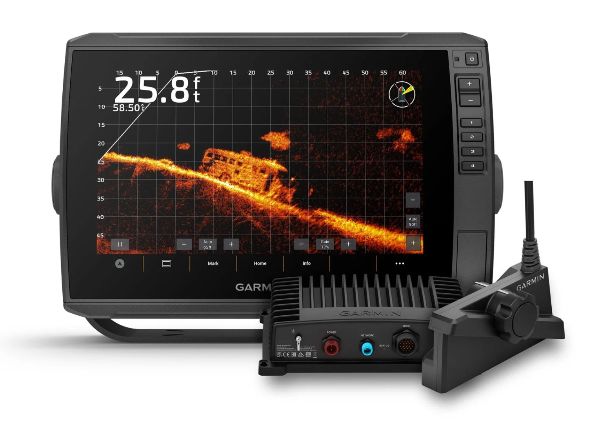
What really separates forward-facing sonar from past electronics leaps is visibility. With down-looking sonar or side-scan, you could still fish your way—interpret the picture, make decisions, and live with some uncertainty. With live sonar, you watch fish swim, rise, sink, follow, or reject your bait in real time. It feels less like fishing and more like playing a different game entirely.
Fishing has always rewarded knowledge and time on the water, but it also rewarded stubbornness, intuition, and faith in a spot. Forward-facing sonar tilts the balance toward data interpretation. Younger anglers raised on screens and video games tend to adapt quickly. Older anglers often resist it, then resent it, and then quietly start pricing units anyway.
None of this means the “have-nots” are finished. Plenty of skilled anglers still catch fish without watching them on a screen, particularly in spring and early summer when the fish are shallow. But the middle ground is shrinking. As the technology trickles down, it doesn’t level the field—it redraws it. The advantage once limited to elite tournament boats is now portable, modular, and increasingly common. Even ice anglers now use it, finding fish with portable forward-facing units.
On heavily pressured fisheries, the implications are real. Fish are located faster. Pressure concentrates sooner. And those that don’t have it watch those who do have it score at levels they never dreamed possible.
Forward-facing sonar didn’t invent inequality in fishing. But it may be the first technology that makes it impossible to ignore.
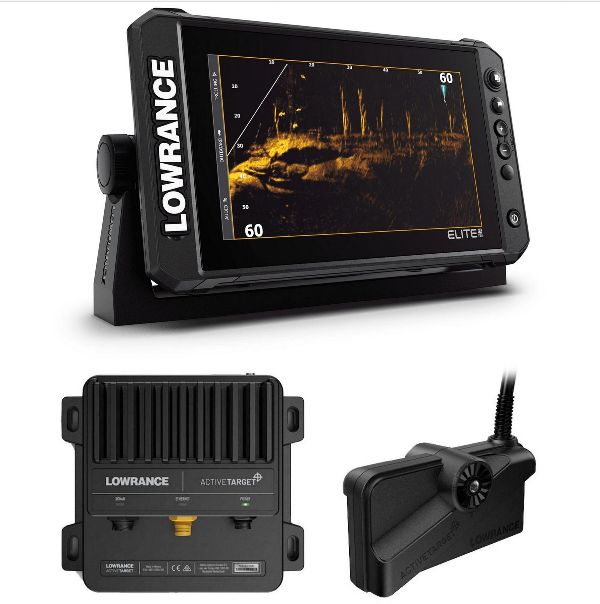
It’s also likely to ripple into management and regulations. Species such as walleye and crappie—fish that are often harvested when caught—could face increased pressure. The same is true in saltwater for species like snapper and sheepshead, which are primarily targeted for food. As more anglers adopt and master forward-facing sonar, tighter limits and shorter seasons are almost certain.
Bass tournaments have already begun responding, with some organizations banning forward-facing sonar outright or limiting when it can be used. But for weekend anglers fishing for fun, the frustration remains: watching nearby boats quietly load up on quality fish you didn’t even know were there.
Eventually, as more units cycle through the used market, most serious anglers will probably go with the flow, just as they have with every major leap in fish-finding technology before.
Of course, by then, the next big thing will have arrived—and we of the Luddite clan will be annoyed that we can’t afford that, either.
– Frank Sargeant
Frankmako1@gmail.com