
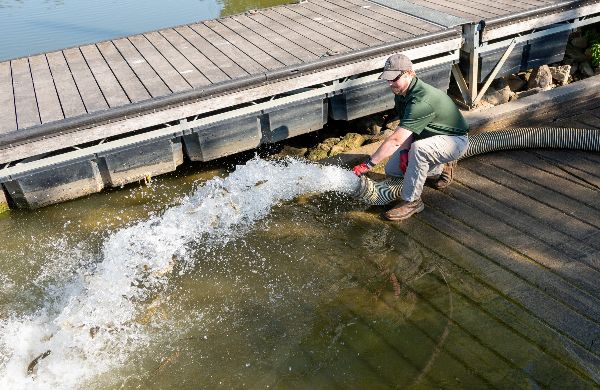
There’s a growing argument making the rounds in elite publications that state wildlife agencies are undermining conservation by stocking nonnative fish.
Some states have gone so far as to try to wipe out smallmouths, walleye, brown trout and other introduced species in some of their waterways.
The logic goes like this: introduced species can disrupt ecosystems, therefore stocking trout, bass, or other nonnative fish is environmentally irresponsible—especially when agencies also spend money fighting invasive species elsewhere.
On paper, that sounds tidy. On the water, it doesn’t make sense in many cases.
Stocking fish isn’t a relic of ecological ignorance. It’s a practical response to a landscape that has already been radically altered—and one of the few tools left that keeps people invested in fixing it.
Most of the waters Americans fish today are not pristine, native systems waiting to be restored to some imagined baseline. They are reservoirs created by dams, urban ponds, flood-control lakes, channelized rivers, warmwater tailraces, and streams reshaped by agriculture, logging, and development that occurred generations ago. In many of these places, the original native fish communities cannot survive no matter how much we wish they could.
Stocking doesn’t “ruin” those waters. It gives them purpose.
A human-made reservoir without a managed fishery isn’t a thriving ecosystem—it’s just a flooded valley. Stocked fish convert altered water into something socially and politically valuable. They bring anglers. Anglers bring funding. Funding supports habitat work that benefits everything else in the system, from insects to birds to non-game fish.
That reality is often dismissed as economics trumping ecology. In truth, it’s ecology surviving because economics allows it to.
It’s true that introduced fish can have impacts. Fisheries biologists have known that for decades. That’s why stocking today looks nothing like it did in the early 1900s. Modern programs are targeted, regulated, and increasingly conservative. Sensitive watersheds are closed to stocking altogether. Native strongholds are protected. Sterile fish are used where reproduction would pose a risk. Some waters are stocked specifically to protect wild fish by absorbing angling pressure elsewhere.
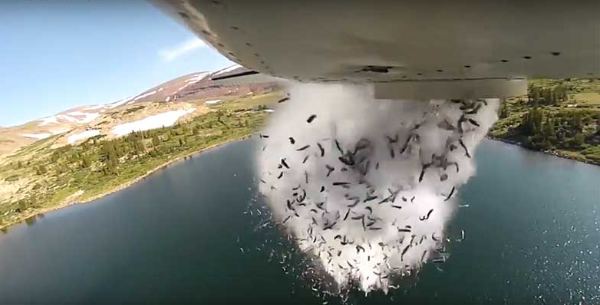
This is not blind dumping. It’s triage for otherwise sick systems.
Critics often point to high-elevation lakes where trout introductions reduced amphibians and insects. Those impacts are real—but so is the response. Many agencies have already halted stocking in those systems, removed fish from select waters, or designated them as fishless preserves. That’s adaptive management in action, not denial. And plenty of these high-altitude fisheries still remain, for those who love the reward at the end of a long high-country hike.
The same goes for concerns about competition and hybridization. These risks are well understood, and in many cases already addressed through watershed-level planning, genetic safeguards, and selective stocking bans. Where native fish can realistically recover, agencies increasingly prioritize habitat over hatcheries. Where they can’t, stocking maintains public use without pretending the system is something it no longer is.
What often goes unsaid in these debates is who actually pays for conservation.
Anglers and boaters do.
Fishing license sales, excise taxes on tackle, boat fuel taxes, and registrations fund the overwhelming majority of aquatic conservation work in this country. That includes non-game programs, endangered species recovery, water-quality monitoring, riparian restoration, dam removal, and streambank stabilization—projects that benefit far more than the fish and the anglers.
The idea that stocking exists only to “sell licenses” misses the point. Participation is conservation. When people fish, they have skin in the game. They notice when water turns muddy, when access disappears, when new invasives like silver carp show up, when habitat is lost. They show up at public meetings—although they could be better at it in some areas. They support funding measures. They demand better management.
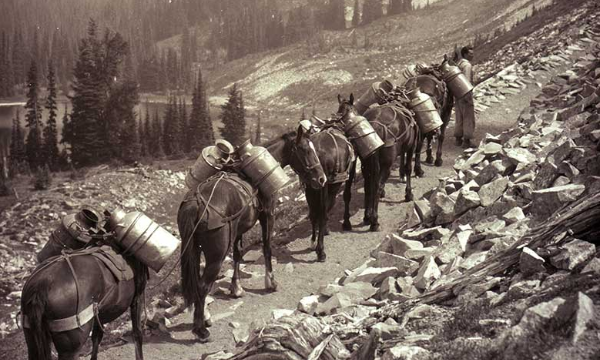
Remove the fish—and we don’t get a renaissance of native biodiversity. We get apathy.
There’s also a quiet contradiction in calls to shift conservation funding away from anglers toward non-consumptive users. Hikers, birders, and paddlers absolutely care about healthy ecosystems—but they are not currently paying at a scale that sustains professional wildlife management. Until that changes in a meaningful, durable way, dismantling the user-pay model risks collapsing the very system critics say they want to improve.
It’s hard to envision the anti-stocking folks ponying up for an annual license to hike or bike or camp—more likely, that financing will remain on the shoulders of anglers and boaters.
Stocked fish are the reason conservation still has a paying constituency in many locations.
The real threats to native fish in most areas aren’t hatchery trucks. They’re warming water, altered flows, legacy pollution, invasive mussels, poor land use, and political indifference. Stocking doesn’t cause those problems—and eliminating it won’t solve them.
What stocking does is keep people connected to the water while the harder work of conservation and restoration continues.
– Frank Sargeant
Frankmako1@gmail.com