
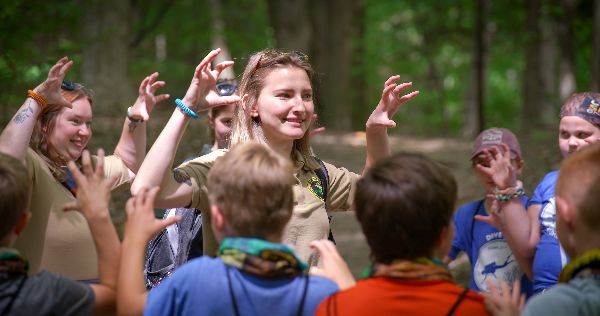
“When I looked outside my window before, it just looked lame,” said Leo, a fourth grader from Lake Orion. “I look closer now after this field trip. It was the coolest thing I have ever experienced in my nine years I’ve been alive.”
Sometimes, as Leo found on his field trip to Bald Mountain Recreation Area, some of the best classrooms aren’t bound by four walls.
Through the Michigan Department of Natural Resources’ Nature Awaits program, fourth grade students are connecting their classroom learning to the natural world through a 90-minute guided field trip to one of more than two dozen Michigan state parks.
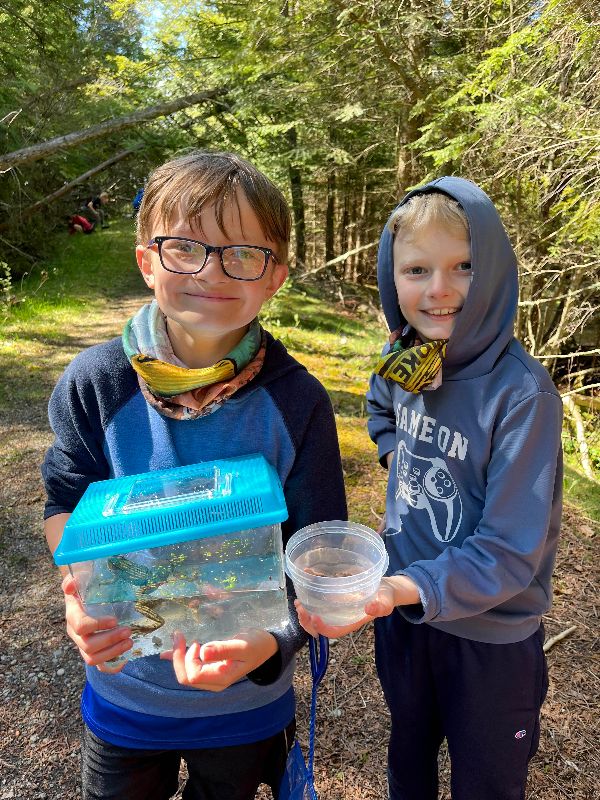
For many students, especially those from urban and low-income communities, the trip is also their first visit to public lands or one of the Great Lakes — places central to Michigan’s outdoor heritage.
Since the program’s start two years ago, Nature Awaits has helped over 60,000 students get more comfortable outdoors, supported their academic engagement and, hopefully, sparked the start of a long-term love for our lands, waters, fish and wildlife.
Moving the classroom outside
Spending time in nature isn't just for fun — it improves students’ learning and helps them thrive. Research has shown outdoor experiences can improve their focus, behavior and academic performance.
“When students learn outdoors, they aren’t just hearing about science — they are actively doing the work of scientists,” said Leanne Weber, science education consultant for the Michigan Department of Education. “Hands-on exploration gives them the opportunity to investigate real phenomena, make sense of what they observe and build authentic scientific understanding that is aligned with Michigan's three-dimensional science standards.”
One way to create these experiences is through nature-based education, which has been practiced around the world for more than a century. Studies show nature-based education helps children strengthen their observation skills, investigate their surroundings by using their senses and develop confidence while they build stronger relationships with their peers.
Teachers participating in Nature Awaits have noticed this firsthand.
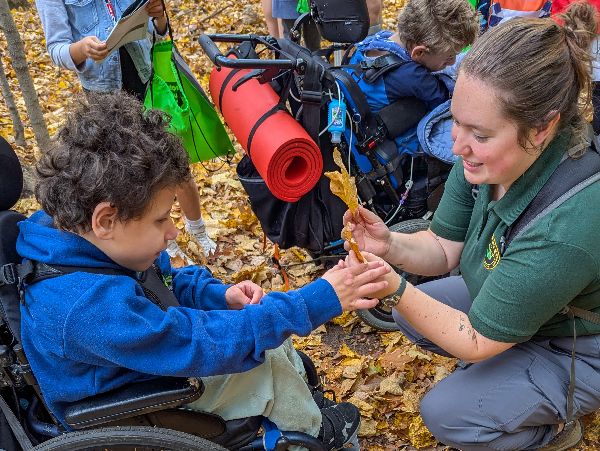
“The best part of the field trip was having the students interact with nature and learn about the outside world around them,” said Erin Hardy from Tekonsha Elementary School in Calhoun County. “Some of my students struggle in the classroom, but they have extensive knowledge about nature, so this field trip gave them the opportunity to shine.”
Outdoor learning is especially valuable because many students spend large amounts of time indoors or on digital devices. Time in nature gives them an opportunity to safely balance this lifestyle.
“I loved seeing the curiosity and joy from my students during the field trip, especially those who have not spent much time outside,” said Barbara Hutchinson from Bean Elementary in Jackson County. “One of my students, who spends most days inside and on a gaming system, had the biggest smile during our nature walk. After the trip, he said to me that he really likes nature now.
“When I asked him what made him enjoy it so much, he said that being outside made him feel calm. He said he couldn’t wait to spend more time outside. That right there made me believe in the power of this program.”
Supporting learning goals
Despite the proven benefits of outdoor learning, barriers often stop it from happening in many schools. Funding is one of the biggest challenges that schools face, with outdoor learning requiring additional resources, lesson plans and transportation. Nature Awaits eliminates these barriers by providing classroom resources and transportation reimbursement for public schools.
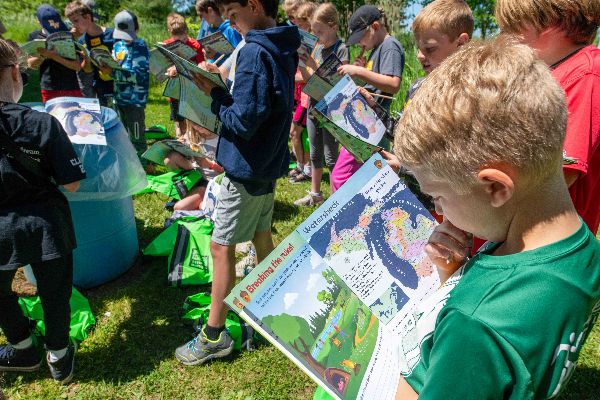
Another challenge that exists is the amount of curriculum content that teachers must cover throughout the school year. Fourth-grade teachers are expected to address well over 100 academic standards across multiple subject areas each year. With a typical 180-day school year, that would average roughly one new standard every one to two days.
Nature Awaits is infused with more than a dozen academic standards throughout its curriculum, supporting teachers’ guidelines and offering students new, creative ways to access and reinforce information.
For example, program activities help students:
- Discover how human choices shape the natural landscape around us.
- Investigate Michigan’s native species and the invasive plants and animals that threaten local ecosystems and economies.
- Explore civic responsibility and recognize that our state parks belong to everyone in Michigan.
- Strengthen observation, literacy and discussion skills through inquiry-based learning.
“The best part is that Nature Awaits aligns to fourth grade standards,” said Paula Holland, a teacher from Unionville Sebewaing Elementary School in Huron County. “Students start learning in class about what they saw on the trip and can connect their in-class learning to the hands-on approach at the field trip.”
Nature Awaits also helps students learn more about their local communities. Many of the kids wouldn’t otherwise be able to experience nature in this immersive way.
“It was great to see our students out in nature, talking about nature,” said Maren Holcomb, a teacher from Sycamore Elementary School in Ingham County. “Our students spend so much time indoors and are unaware of the beautiful parks that are so close to where they live. We would not have been able to visit the park without this program.”
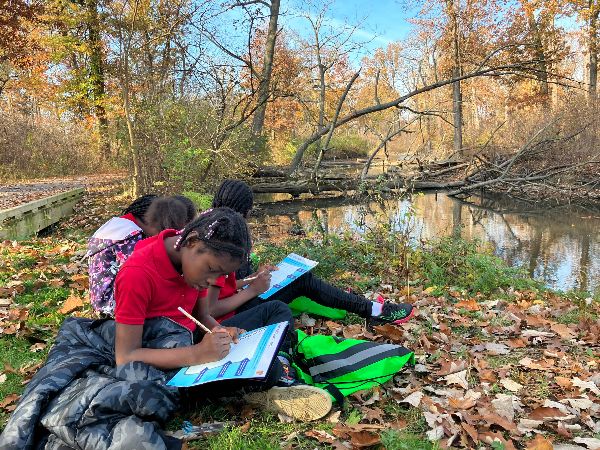
The program’s transportation grant plays an essential role for many public-school teachers. A post-field trip survey of 372 schools showed how limited field trip opportunities are for many students. Ten percent of the schools reported that Nature Awaits would be their students’ only field trip that year, and 36% said they could afford to attend only one additional field trip beyond Nature Awaits.
Helping teachers, students and families
Nature Awaits aims to support learning beyond the 90 minutes students spend at a state park during their field trip. The program also includes materials and activities for teachers to use before and after the outing, ensuring the field trip is part of a larger learning cycle instead of a stand-alone event.
The field trip itself is also grounded in strong educational expertise. Programs are led by DNR staff who are well versed in both formal and informal education and are skilled at creating meaningful, hands-on learning experiences for students.
Just as important, Nature Awaits serves as an introduction to the many resources the DNR offers. From classroom programs and additional field trip opportunities to stewardship programs about salmon and professional development programs for educators, students and teachers can continue building on their experiences in nature long after their Nature Awaits visit ends.
To further support this, participating students also receive free vouchers to return to a state park of their choice, the Michigan History Center in Lansing or the Outdoor Adventure Center in downtown Detroit – all of which help to ensure that the students, regardless of their background, have access to resources that support their learning and well-being without causing additional financial strain on families.
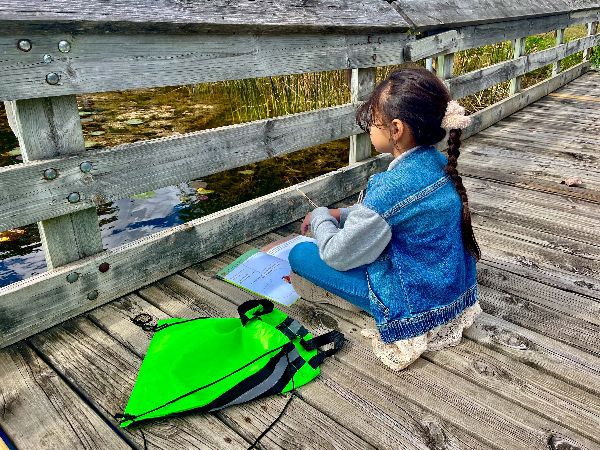
“So many of my students have never seen a Great Lake before, and the Nature Awaits program made that possible for them. Some of our students are experiencing homelessness and many more of them are living in extreme poverty, so a trip like this would be impossible if it were not for the assistance from the DNR,” said Lora Wallwich from Michener Elementary School in Lenawee County. “Experiences like this are beyond the reach of children who live in poverty. Programs like this help to give every child in our state the ability to learn important life lessons regardless of their family’s ability to travel.”
Only a handful of states in the nation offer initiatives like Nature Awaits that provide field trips for fourth grade students. Michigan’s program is one of the most academically comprehensive and successful, with Nature Awaits enrollment comparable to a similar program in California – despite California having a population four times Michigan’s.
Program funding during the first two years was allocated in Michigan’s state budget – dollars that were instrumental in laying the foundation to get Nature Awaits off the ground. Uncertainty in future budget cycles makes it hard to look too far ahead for the program.
"This program is really finding its stride: As it grows, and more schools in communities around the state take part, we see kids making connections, getting excited about learning and teachers thrilled to expand their classrooms in such an impactful way,” said Katie McGlashen, Nature Awaits coordinator. “We see the return on investment in this program, and the opportunities to influence long-term learning and greater awareness and love for Michigan’s natural resources, but it’s hard to keep that momentum when we don’t know if we’ll be able to purchase supplies, schedule educators or create the critical materials kids and teachers use.”
Delivering real results, long-term impact
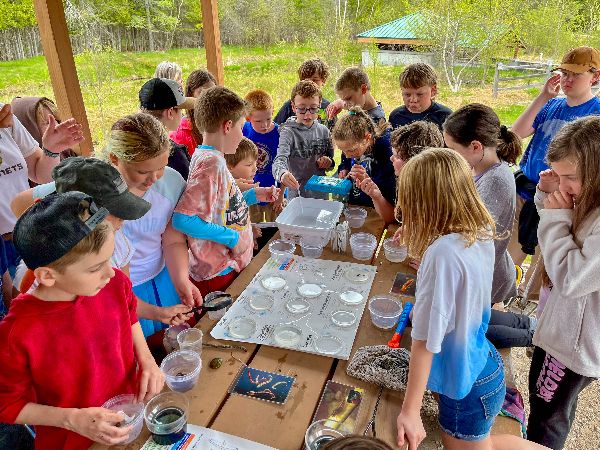
Since launching in 2024, the Nature Awaits program has received strong support from participating educators, with 98.5% reporting that they would recommend the program. More than 500 schools have already attended programs at one of the 30 host state parks located in communities throughout both Michigan peninsulas.
The program also has implications for communities beyond classroom learning.
Michigan’s outdoor recreation industry contributes $15.1 billion annually to the state’s economy and supports thousands of jobs. In 2025 alone, Nature Awaits has helped over 29,000 students, teachers and chaperones better understand and appreciate the lakes, rivers, forests, trails and many other natural places that are the backdrop for these outdoor experiences.
“Before we know it, these fourth graders are going to be deciding where they see their future, either here in Michigan or not,” McGlashen said. “Having a connection to our parks, beginning to understand their value and how public lands enhance the lives of Michiganders, that’s how we can help.
“Nature Awaits helps open the door to Michigan’s great outdoors. As more children get the chance to see, use and love our state parks, we believe they’ll start to realize that anyone, at any age, is welcome to experience, enjoy and protect all of Michigan's special outdoor places.”
Students also are inspired to ask for more time in nature after their state park visit.
“This trip taught me to use my senses and to relax. I never knew nature could calm you like this,” said Cora, a fourth grader from Lake Orion. “This trip changed my opinion about nature and is something I will never forget. I loved it.”
Learn more about the Nature Awaits program at Michigan.gov/NatureAwaits.
– Aileen Kemme, Nature Awaits communications coordinator and Sarah Lapshan, senior communications advisor Michigan DNR