
A Texas entrepreneur is putting his own money on the line to answer one of professional bass fishing’s longest-running arguments: which league really has the best anglers?

Brian Bird, a 51-year-old from Eastland, Texas, plans to stage The Champions tournament Oct. 28–Nov. 1 on Old Hickory Lake near Nashville, Tennessee, offering the richest single payout the sport has ever seen—$1.25 million to the winner as part of a purse topping $3 million. But the money, eye-catching as it is, isn’t the real point. By bringing the top performers from both the Bassmaster Elite Series and Major League Fishing’s Bass Pro Tour onto the same water, under the same rules, Bird is aiming squarely at a debate bass anglers have been having since the sport split in 2018.
When MLF launched the Bass Pro Tour and drew many of the sport’s biggest names away from B.A.S.S., professional bass fishing fractured into two elite camps. Since then, comparisons have been constant and mostly inconclusive. The anglers don’t fish the same formats. They aren’t judged by the same metrics. Even “winning” means different things. The Champions may not settle the argument forever, but it will put it to a real test.
The field will be drawn from the top 25 anglers in Angler of the Year points from both tours, along with automatic berths for individual tournament winners. Competition will use a traditional five-fish weigh-in format, with live sonar allowed only in limited windows. After two days, the field will be cut to 15 anglers for the final round. It’s a hybrid setup—neither pure B.A.S.S. nor pure MLF—which is exactly what makes it interesting.
The problem, of course, is defining what “better” actually means.
The Bassmaster Elite Series still rewards a traditional tournament skill set. Five-fish limits. Multi-day weight management. Fishing under crowd pressure. Knowing when to lean on a school and when to leave it alone. One bad day can erase months of consistency; one giant fish can rescue a season. Elite anglers tend to think in terms of survival as much as domination.
MLF’s Bass Pro Tour emphasizes something else entirely. Every legal fish counts. Decisions come fast. Dead water gets abandoned quickly. The best anglers on that tour excel at rapid pattern recognition and constant adjustment, often guided by immediate feedback from electronics and scoring updates. Hesitation is usually punished.
The Champions sits squarely between those worlds.
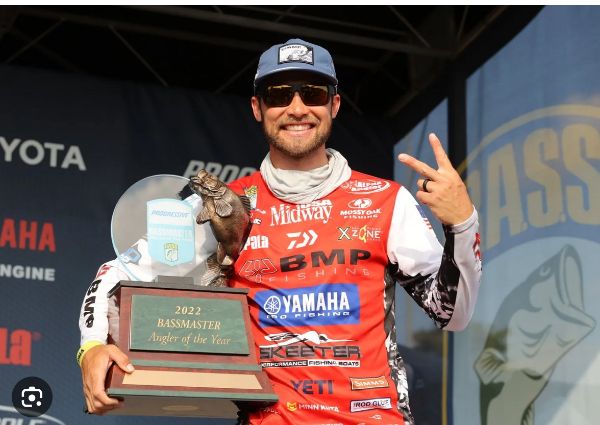
If Old Hickory turns into a grind—tight schools, limited bites, heavy pressure—Elite Series anglers may have the advantage. They’re accustomed to stretching marginal patterns and protecting key areas over several days. Anglers like Seth Feider, Brandon Palaniuk, and John Cox represent different expressions of that discipline. Feider has made a career out of grinding on pressured fisheries. Palaniuk blends seasonal instincts with modern electronics as well as anyone in the sport. Cox, often fishing against the prevailing trend, thrives when others overthink conditions.
Elite anglers also tend to err on the side of caution when the stakes rise. In a tournament where first place pays more than many pros will earn in a lifetime, that restraint could matter.
On the other hand, if Old Hickory sets up with scattered fish and short feeding windows, the edge may tilt toward MLF. Bass Pro Tour anglers are comfortable fishing fast, resetting often, and trusting what they’re seeing—or not seeing—in real time.
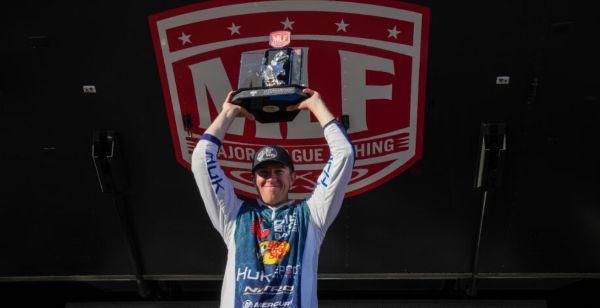
It’s hard to imagine a serious discussion without Jacob Wheeler, whose success across formats has already blurred the league lines. Dustin Connell’s mix of intensity and versatility makes him dangerous when patterns change daily. Ott DeFoe brings a rare perspective, having won at the highest levels in both B.A.S.S. and MLF environments. And Drew Gill, one of the hottest anglers in the sport right now, has shown an uncanny ability to dissect unfamiliar water quickly and capitalize before patterns fade.
MLF anglers are generally less inclined to sit and wait. In a condensed event with a shrinking field and restricted sonar use, that decisiveness could separate contenders early.
The biggest unknown, though, is pressure.
Neither league regularly fishes for this kind of money. A $1.25 million first prize alters behavior. Conservative anglers may gamble. Aggressive anglers may suddenly protect water. Mistakes that usually cost a few places could cost a career-defining win. More than anything else, The Champions will test nerve.
Anglers who have already won Classics, Cups, or Angler of the Year titles will have an advantage, regardless of league affiliation. They’ve carried that weight before.
So which league is better?
The honest answer may be neither—at least not in the way fans usually argue it. The Champions is likely to show that the very best anglers are the ones who have already moved beyond format loyalty. The winner may wear a B.A.S.S. or MLF patch, but the result will belong to someone adaptable enough to fish outside his home system.
If the event succeeds, it won’t prove that one league is superior. It will show that greatness in bass fishing still comes down to judgment, restraint, and timing—qualities that matter more than logos when the pressure is real.
– Frank Sargeant