
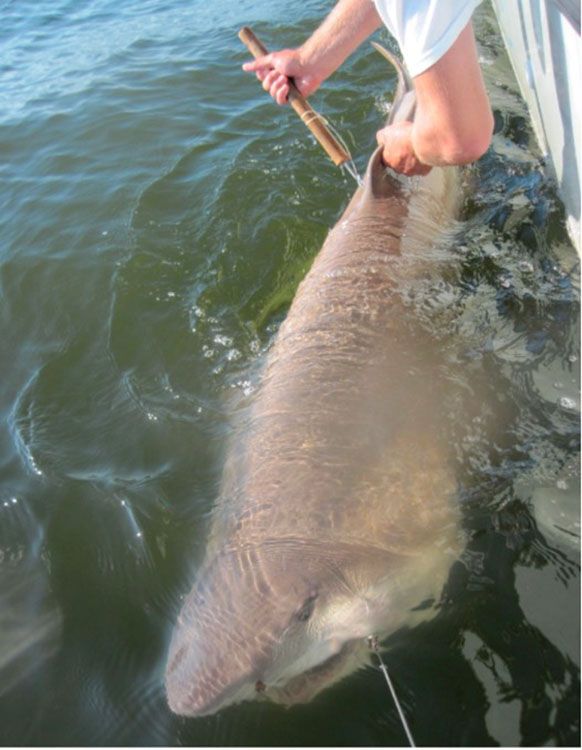
It won’t surprise most U.S. coastal anglers that the number of shark bites went up again in 2025, after an unusually quiet 2024, according to data from the International Shark Attack File, maintained by the Florida Museum of Natural History. Researchers documented 65 unprovoked bites worldwide last year, slightly below the 10-year average of 72. Nine of those incidents were fatal, compared with a long-term annual average of six.
The United States again recorded more shark bites than any other nation, but its share of global incidents surprisingly declined. U.S. waters accounted for 38 percent of all unprovoked bites in 2025, down from more than 50 percent annually since 2019.
Twenty-five unprovoked shark bites were reported in U.S. waters in 2025, with one fatality. Florida again led the nation with 11 bites, well below its recent five-year average of 18. Volusia County recorded six incidents, down from a 10-year average of nine and far below the 17 bites reported there in 2021. The area is a favorite spot for surfers—and also a favorite spot for young sharks to feed on mullet and other baitfish.
Several highly publicized incidents along the U.S. East Coast in June drew national attention, including serious injuries to juveniles in Florida and South Carolina and a minor bite in New York. The lone U.S. fatality occurred in central California, where a 55-year-old triathlete was killed by a white shark while swimming in Monterey Bay.
Australia followed the United States with 21 unprovoked bites in 2025, well above its recent five-year average of 13. Australia also accounted for five of the world’s nine fatalities. Researchers note that Australia’s extensive overlap with white, tiger, and bull sharks increases the likelihood of severe injuries, though rapid emergency response is credited with limiting fatalities.
Additional incidents were recorded in the Bahamas, New Zealand, Mozambique, Samoa, the Canary Islands, Canada, and Puerto Rico. One fatal attack in South Africa marked the first confirmed case involving a dusky shark during the annual sardine run, when predators and prey concentrate in shallow coastal waters.
Despite year-to-year variability, long-term trends remain stable. Ten-, 20-, and 30-year averages for unprovoked bites differ by only four incidents, and fatalities have averaged six per year across all three periods. At the same time, many shark populations remain well below historical levels due to overfishing, with roughly 30 percent of species considered endangered.
In U.S. waters, though, virtually all offshore anglers report shark numbers have dramatically increased after decades of protection from commercial harvest—most shark harvest ended here in 2000. Even though most shark species are slow at reproduction, total protection has brought them back strongly, and now in many areas reef fishermen complain they can’t get a grouper or a snapper in the boat without a shark taking a chunk out of it. Tarpon anglers at the major west coast passes deal with the same malady.
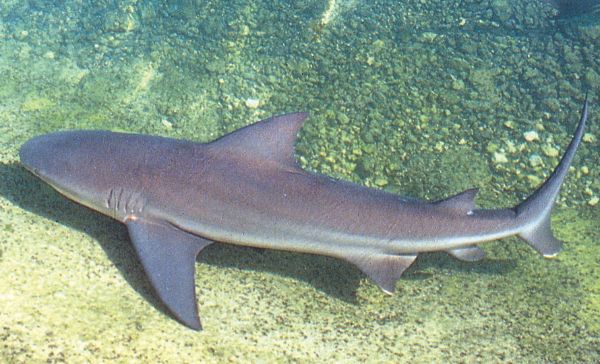
The apparent contradiction—recovering shark populations alongside fewer reported human bites in U.S. waters—likely reflects ecological and behavioral factors rather than changes in shark temperament. Many of the species showing recovery are increasing first at juvenile stages. Juvenile sharks feed on smaller prey, occupy more restricted habitats, and are less likely to inflict serious injuries that result in formal reports.
Our behavior has also changed. After several high-profile bite years earlier in the decade, many coastal communities expanded drone surveillance, improved real-time alert systems, and closed beaches more quickly when sharks were spotted. Swimmers and surfers appear more responsive to warnings, shortening exposure time during periods of elevated risk.
And now, everybody is connected—news of a shark bite travels very rapidly, and most swimmers stay clear of areas that are at risk, often during times of seasonal migrations or baitfish swarming.
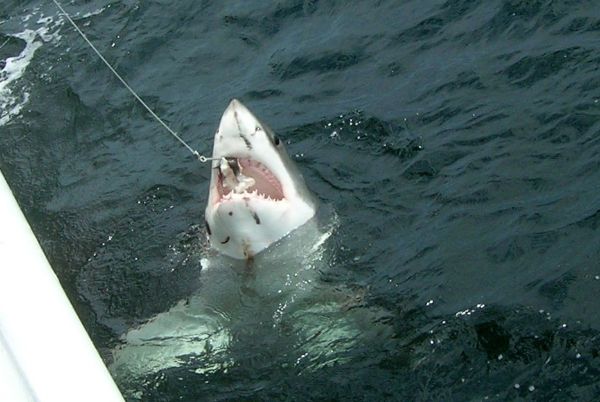
Participation in higher-risk activities may also fluctuate. Surfers, spear fishers, and offshore swimmers account for a disproportionate share of reported bites—but word of that risk is now widely known: more people avoid risky behavior, even though there are more of us visiting the coasts. (On the other hand, some tropic islands offer shark dives that, surprisingly, only rarely have divers coming up with fewer hands and feet than they went down with.)
Researchers continue to emphasize that the risk of a shark bite remains extremely low compared with other coastal hazards. You’re a lot more likely to step on a sting ray than get bitten by a shark.
Standard safety guidance remains unchanged: avoid swimming at dawn and dusk, avoid swimming outside the bar, avoid swimming around the passes, and if you see sharks, stay out of the water. Swimming anywhere fish are cleaned and the carcasses thrown in the water—common at many coastal marinas—is another obvious no-no. And the idea that sharks just want to be our friends and are happy to have us swim and dive in close contact with them—that’s not going to make your insurance company happy.
Follow basic precautions and no matter if you’re the saltiest dog on the beach, your odds of ever becoming a shark bite statistic are way lower than getting hit by lightening.
– Frank Sargeant
Frankmako1@gmail.com