
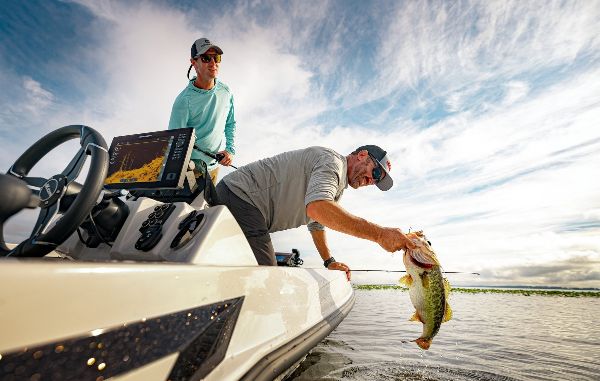
If you’re planning a Florida fishing trip this spring or summer—whether for bass and crappies in freshwater or snook, reds and trout on salt, there’s a licensing change you need to know about before you arrive.
In late 2025, the Florida Fish and Wildlife Conservation Commission quietly eliminated online and phone sales of short-term non-resident fishing licenses. The 3-day and 7-day licenses once favored by visiting anglers can no longer be purchased through GoOutdoorsFlorida.com or the Fish|Hunt FL app. Instead, out-of-state anglers must buy those licenses in person at a county tax collector’s office or an authorized license agent before fishing.
Annual non-resident licenses remain available online. But for anglers in Florida for only a few days, the change adds a layer of friction that didn’t exist before—and it’s already being felt on the water.
For years, short-term licenses were one of the easiest parts of planning a Florida fishing trip. You could buy one online in minutes, download it to your phone, and be legally fishing the same day you landed. That convenience mattered to families on vacation, weekend travelers, and anyone squeezing fishing into a tight schedule.
Now, unless visitors know the rule change ahead of time, their first fishing day can begin with a search for a license agent—assuming one is open, nearby, and actually sells fishing licenses. That’s time lost during what is often the best bite of the day.
It’s important to note one major exception: this change does not affect most saltwater charter fishing. Florida’s for-hire saltwater vessels operate under a “blanket” license that covers anglers on board, resident or non-resident. Anyone booking a guided offshore or inshore saltwater trip is typically unaffected. The impact falls primarily on do-it-yourself anglers and freshwater guides, where individual licenses are still required.
FWC declined to comment when asked directly about the reasoning behind the change. But the structure of the rule—and how it was implemented—offers some clues.
One likely factor is administrative efficiency. Short-term non-resident licenses generate relatively little revenue per transaction but reportedly carry the same backend costs as longer-term licenses: credit card fees, fraud screening, customer support, and dispute resolution. From an agency standpoint, thousands of low-dollar, short-duration online transactions are costly to manage.
By shifting those sales to tax collectors and retail agents, FWC offloads much of that burden. In-person purchases reduce chargebacks, incorrect license selections, and identity issues, while moving customer service responsibilities to local offices that already handle them.
There’s also a revenue-stability angle that’s hard to ignore. Annual non-resident licenses—still available online—bring in significantly more money per sale and are easier for the agency to forecast and budget. Requiring in-person purchases for short-term licenses may push some visiting anglers toward annual licenses, even if they’re only fishing for a few days. Others, however, may simply decide not to fish at all.
That’s where the concern lies.
Freshwater guides in Central Florida report increased confusion among visiting clients, some of whom arrive assuming they can buy a license online as they always have. A few guides say bookings have softened, particularly for short notice trips, as visitors reconsider whether the hassle is worth it. FWC has released no data yet on participation or revenue trends since the change.
The irony is that license dollars are not incidental to Florida’s fisheries. Revenue from fishing licenses funds conservation, habitat work, research, enforcement, and stocking programs. Anything that suppresses legal participation—especially among visitors—has downstream effects that extend beyond inconvenience.
FWC has pointed out that licenses are still available at hundreds of locations statewide, and that simplifying the online license catalog makes the system easier to manage. From an internal operations standpoint, that may be true. From an angler’s perspective—particularly one flying in for a short trip—it feels like a step backward, an aggravating anachronism.
Fishing access isn’t just about ramps and shorelines. It’s also about how easy it is to participate legally. Florida markets itself as the fishing capital of the world, and much of that reputation rests on visiting anglers who come for a few days, spend money locally, and leave with plans to return.
Whether the change ultimately increases revenue efficiency or quietly discourages participation is something only time, and transparent data, will answer. For now, visiting anglers would be wise to plan ahead—and policymakers might consider whether administrative convenience is worth the cost of lost casts, lost trips, and lost goodwill.
– Frank Sargeant
Frankmako1@gmail.com