
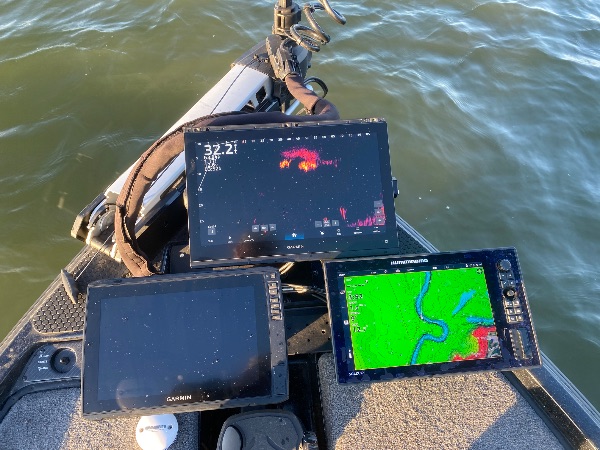
Forward-facing sonar (FFS) doesn’t necessarily disprove traditional ideas of fish behavior so much as expose how incomplete they were.
Anglers with FFS are now watching fish in real time—watching them approach, hesitate, follow, turn away, re-engage, or flare and vanish. And what they’re seeing has quietly undone a lot of fishing “truths” that were built on assumption rather than observation.
One of the earliest surprises was how often fish don’t strike. Anglers now routinely watch bass, crappie, stripers and walleyes follow a lure for long distances without ever committing. Not just a few feet—sometimes dozens of yards. The fish tracks the bait, matches its speed, inspects it, then drifts off as if bored. That kind of prolonged curiosity without a strike was invisible before. We passed over countless fish without knowing they were there. Now we know where they are—and where they are not.
It means those with FFS spend their time on the water fishing where they are, and that usually results in better catches.
Making Them Bite
On live sonar, anglers often see a fish ignore a steady retrieve, then attack when the bait pauses, stalls, or suddenly accelerates. The strike doesn’t always come when the lure looks most “natural.” It comes when something changes. That has forced a rethink of retrieve theory, especially for suspended fish that aren’t tied to bottom or cover.
Live sonar has also challenged the idea that fish in a group behave as a unit. Traditional sonar compressed schools into blobs; anglers treated them as single targets. On live sonar, individuality becomes obvious. One fish charges and eats. Another tracks and fades. A third never moves at all. That explains a lot of head-scratching days when anglers “knew” fish were there but couldn’t get bit. The fish weren’t inactive as a group—some were simply uninterested.
Competition, however, changes everything. Anglers watching multiple fish respond to a bait often see a shift the moment one fish commits. Others rush in because they don’t want to lose it. That insight has reshaped how anglers think about lure size, fall rate, and speed when fish are grouped versus alone. It’s no longer just about matching the hatch—it’s about triggering the bite.
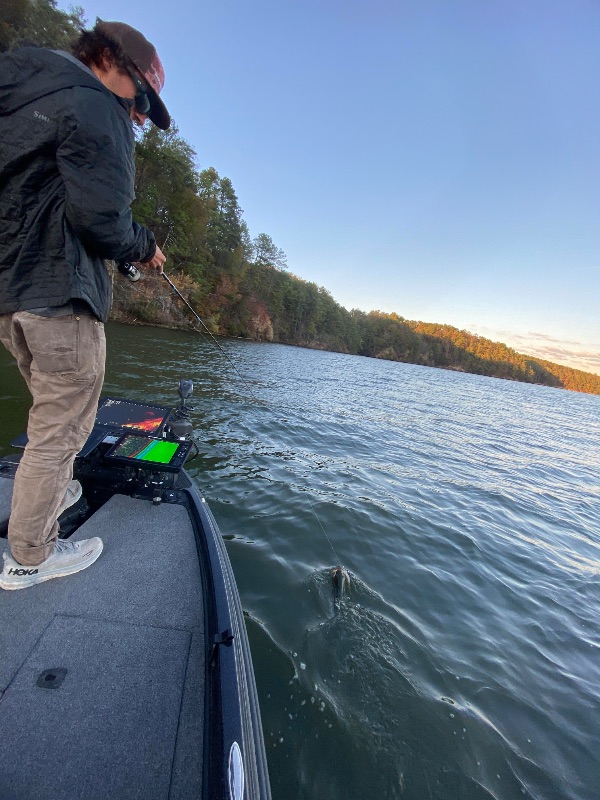
Forward-facing sonar routinely shows fish abandoning textbook structure and roaming open water, sometimes hundreds of yards from anything that would have been considered a holding area a decade ago. These fish aren’t lost; they’re hunting. Anglers targeting pelagic bass, crappie, or freshwater stripers now talk less about waypoints and more about timing, direction of movement, and bait position in the water column.
By far the best live sonar bass lure is a simple lightweight jig-head soft plastic with a tapered tail in white or cream. And the best retrieve is almost no retrieve—anglers simply shake the rod to make the bait shiver as it slowly sinks down to just above the target.
Live sonar has also revealed how sensitive fish can be to movement above them. Many anglers have watched fish slide away as a boat drifts closer, or flinch when a trolling motor correction happens at the wrong moment. Some have even observed fish reacting to the sonar itself—subtle shifts rather than panic, but enough to matter. Apparently they can feel the “ping” at closer ranges. That’s led to quieter approaches, longer casts, and more deliberate boat control, especially in clear water.
Watching fish refuse a perfectly presented bait can be frustrating, but it’s also clarifying. You know the fish saw it. You know it chose not to eat. That knowledge changes decision-making. Instead of second-guessing location, anglers focus on lure choice and presentation—and often catch fish they would have missed without FFS.
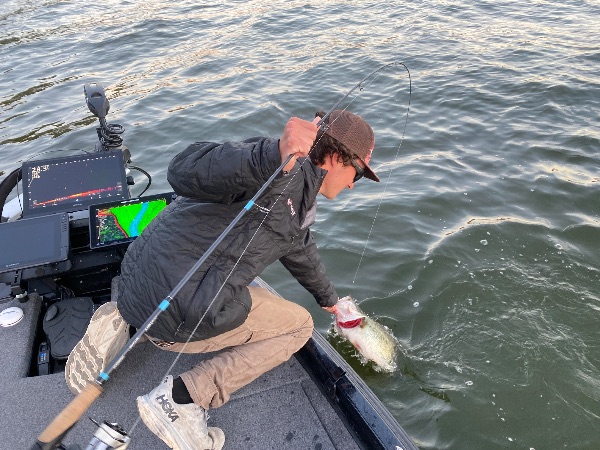
Seeing fish behave in ways that contradict the rules forces anglers to abandon comforting explanations. Fish don’t always “set up” where they’re supposed to. They don’t always feed when conditions look right. They don’t always respond to the same triggers twice.
Forward facing sonar is controversial mostly because it creates haves and have-nots—it’s expensive to buy a complete setup, and those who can’t afford it not surprisingly feel envy and downright anger against those who have it. Skill with electronic gaming—a natural for those born into the age of screens—is also demonstrably tougher for older anglers.
But the wheel of progress turns and every generation feels left behind as it rolls on. It may make some of us unhappy, but FFS is here to stay, and it’s giving us generational leaps in knowledge of fish behavior that will benefit all of us who love angling.
— Frank Sargeant
Frankmako1@gmail.com