
Once the domain of early adopters and DIY tinkerers, electric propulsion has become a real and growing segment of the marine market. Today, well over 20 companies worldwide are building electric outboards or related electric propulsion systems, ranging from portable motors for tenders to serious powerplants aimed at larger recreational and commercial boats.
Quiet, clean, and increasingly capable, these motors are no longer just curiosities. They are becoming legitimate alternatives for jon boats, skiffs, tenders, pontoons, and some workboats—especially in places where noise, emissions, or fuel storage are concerns.
Electric outboards are still relatively expensive compared to comparable gas motors, and batteries remain heavier and offer less range than a full tank of gasoline. But that gap is shrinking quickly. For certain applications—short runs, quiet-water fisheries, regulated lakes, and boats that rarely travel far—electric marine power already makes sense, both practically and economically.
Here’s a look at some of the major players and what each brings to the water.
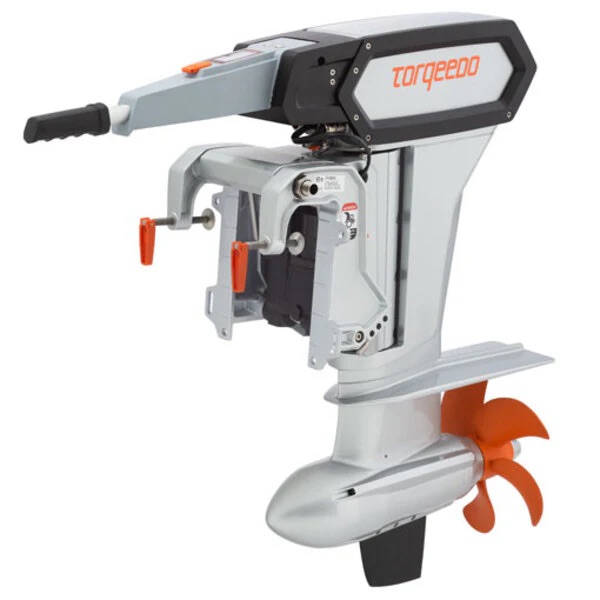
Torqeedo: The German Pioneer
Torqeedo, based in Germany, was among the first companies to approach electric outboards with a serious business model and global distribution. The company has been building electric propulsion systems since the early 2000s and remains one of the most established names in the category.
Its lineup spans from lightweight, portable motors for tenders and small fishing boats to integrated systems equivalent to roughly 20–25 horsepower and beyond. The Cruise series combines motor, battery, and control electronics into compact, water-ready packages known for efficiency and reliability. At the upper end, Torqeedo has produced larger electric outboards capable of pushing heavier craft, underscoring that electric propulsion is no longer confined to small boats.
For anglers fishing quiet lakes or eco-sensitive waters, Torqeedo’s Travel and Cruise models offer near-silent operation, minimal vibration, and digital displays that make monitoring speed and remaining range straightforward.
In 2024, Torqeedo was acquired by Yamaha Marine—perhaps the strongest signal yet that major gas-engine manufacturers see electric propulsion as more than a passing trend.
Mercury Marine Enters the Game
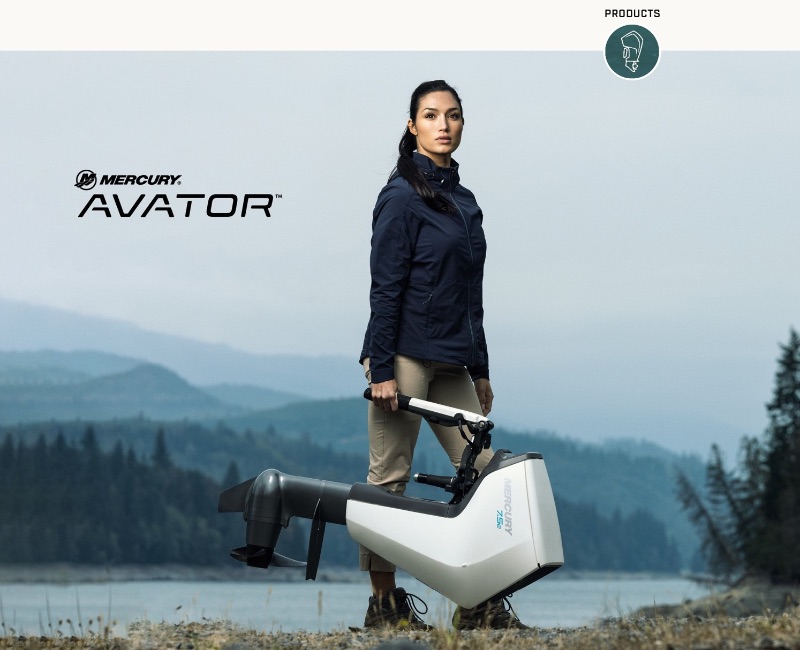
Mercury Marine, the world’s largest outboard manufacturer, entered the electric market several years ago with its Avator series. The move brought instant credibility and a massive dealer-support network to electric propulsion.
Avator motors use modular lithium-ion battery systems designed for portability and ease of use, with a focus on durability that aligns with Mercury’s long-standing reputation. Early offerings targeted the lower end of the power spectrum, roughly equivalent to 3.5–7 horsepower, but the lineup has expanded to include 20e and 35e models suitable for more serious recreational applications.
For anglers and boaters already invested in Mercury service and parts infrastructure, the Avator series offers a familiar pathway into electric power without stepping into an unknown support ecosystem.
ePropulsion: Tech-Forward and User-Friendly
ePropulsion Technology, based in China, has rapidly become a major force in the electric outboard market, particularly for small boats, tenders, and fishing craft. Its Spirit series covers roughly the 3–10 horsepower equivalent range and is known for clean design and intuitive operation.
Many models feature app-based controls and modular battery systems that appeal to tech-savvy boaters. Batteries are designed to be easily removed and swapped, simplifying charging and storage. Competitive pricing compared to some European brands has helped ePropulsion gain a strong international foothold.
For anglers running jon boats, inflatables, or small skiffs, ePropulsion has become one of the most commonly considered electric alternatives.
Vision Marine: Pushing the Power Envelope
Vision Marine Technologies, based in Canada, is focused on the high-power end of electric outboards. In 2023, the company set a world speed record for electric-powered boats using twin e-Motion 180 outboards on a 32-foot catamaran.
That performance comes with tradeoffs. Battery weight remains significant, making electric propulsion better suited to steady cruising than sustained high-speed running. Recognizing that reality, Vision Marine has expanded into factory-rigged pontoon boats up to 30 feet long, pairing hulls optimized for efficiency with their electric outboards.
The company reports ranges of 60 to 90 miles between charges—far more than most pontoon boats cover in a typical day—making electric power a realistic option for many inland lake users.
Yamaha’s Different Approach
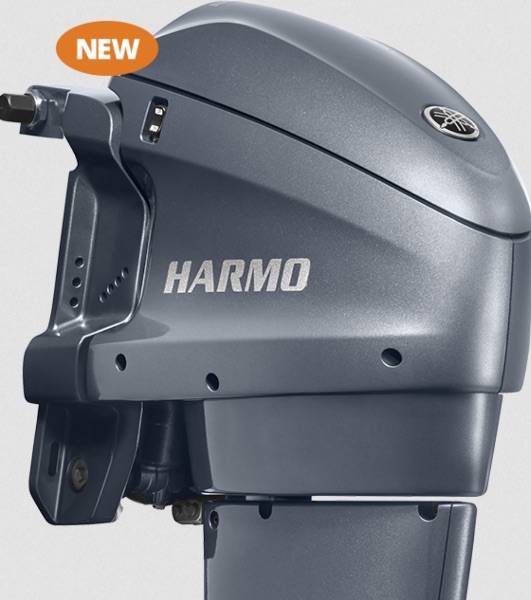
Yamaha’s Harmo system occupies a middle ground between traditional outboards and stern drives. Rated at 9.9 horsepower, Harmo uses a rim-drive design with no vertical shaft or conventional gears, reducing mechanical complexity and potentially lowering maintenance demands.
The system includes integrated digital electric steering and is well suited for pond boats, small pontoons, and displacement-style hulls operating on waters where planing speeds aren’t necessary. While not designed to replace high-horsepower outboards, Harmo highlights Yamaha’s willingness to explore alternative electric architectures.
What This Means for Anglers and Boaters
Electric outboards are still a niche compared to gas engines, but the rapid growth in manufacturers and models shows how quickly the market is maturing. For freshwater anglers fishing quiet lakes or regulated waters, electric motors offer silent operation, instant torque, reduced maintenance, and freedom from gasoline handling.
Battery technology continues to improve, with longer runtimes and more robust marine-grade packs becoming standard. As competition increases, prices are likely to continue edging downward.
Charging infrastructure remains a limiting factor at the high-power end. While most small electric outboards can be recharged overnight using standard 110-volt household power, larger systems often require 240-volt service—still rare at inland marinas. The slow rollout of electric vehicle charging in the U.S. offers a cautionary parallel.
For smaller boats, however, that limitation barely matters. If you can charge in your garage, shed, or driveway, electric outboards already fit neatly into the way many anglers actually use their boats.
Whether electric propulsion replaces gas on a broad scale remains to be seen. But for a growing number of anglers and boaters, the future has already arrived—and it’s remarkably quiet.
— Frank Sargeant