
The Council to Advance Hunting and the Shooting Sports is using SHOT Show to reintroduce itself to the firearms and outdoor industry and explain why its work and evolving funding model matter for the future of hunting, recreational shooting, and conservation.
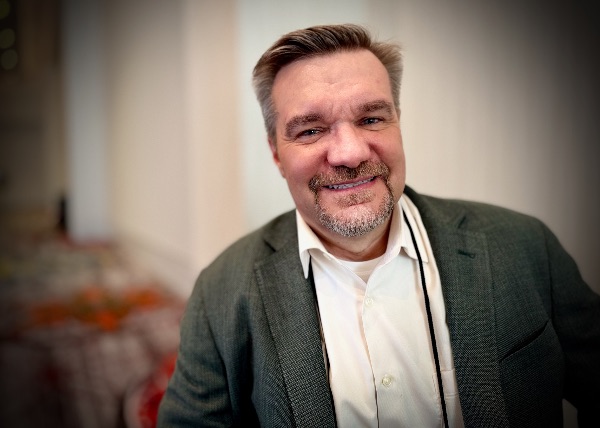
“So, the council’s mission is to grow participation in hunting and recreational shooting and also to improve the general public support of recreational hunting and recreational shooting,” said Scott Lavin, Director of Research and Partnerships.
Lavin noted that while participation remains a small percentage of the population, public acceptance of regulated hunting remains strong.
“Probably, depending on what state you’re in, anywhere between five and 10 percent of the Americans in your state hunt, but currently, nationwide, there’s 73 percent support for legal and regulated hunting,” he said. “You just have to remind the public that hunting is a science-based method of management that has regulations, and they’re absolutely okay with it.”
Founded in 2009 following a presidential executive order aimed at addressing declining hunter numbers, the Council was initially structured as a business-to-business nonprofit.
“The council was founded as more of a business-to-business nonprofit for many years. Our partners, and maybe you could even say our customers, have been state wildlife agencies and national nonprofits that do R3 work,” Lavin said.
Rather than hosting hunts or range days, the Council focused on research, training, and national standards.
“So, we don’t exactly host the programs that are going to take somebody hunting or to the range, but we provide the science, the resources, and the best practices to make those programs more successful across the nation, no matter who’s hosting them,” he said.
That work includes the National R3 Practitioner’s Guide, now widely used by state agencies, and the National R3 Symposium, which trains new professionals entering the field.
“We basically wrote the book. We have the National R3 Practitioners' Guide that most state agencies use,” Lavin said.
For years, the Council’s funding model reflected that agency-focused mission.
“So right now, the council is funded through a multi-state conservation grant, and that covers about 85 to 90 percent of our operations,” Lavin said.
While that funding provided stability, it also limited growth.
“Doesn’t give us a lot of room for growth,” Lavin said. “I tell everybody, nothing was ever created to get smaller, though.”
As participation strategies evolve and new audiences emerge, maintaining and updating national resources requires additional investment.
“As the practitioner guide, which is a living document that is reviewed annually by a team of state agency and nonprofit partners, as we address the changes and what we have learned year after year, we make modifications and adjustments to our resources that take staff time and resources,” Lavin said.
That reality has driven a strategic shift and explains why the Council is at SHOT Show.
“So, what is new is looking to state agencies and other nonprofits to help fund a nonprofit is not exactly the best business model,” Lavin said. “So, what we are trying to do here at SHOT Show this year is introduce ourselves to the industry as a whole.”
The Council has also updated its messaging to reach beyond R3 professionals.
“We were changing the messaging on our website to receive the general public, where traditionally you only know about the council if you worked in R3 as a profession,” Lavin said.
SHOT Show provides a direct connection to manufacturers and companies whose businesses and excise taxes support conservation nationwide.
“So not too many people know about the Pittman-Robertson Wildlife Restoration Act’s excise tax,” Lavin said, “and these manufacturers sell products that generate the excise tax that funds conservation nationwide.”
Lavin said the Council’s role is to help sustain that system.
“So, we’re here to demonstrate to industry partners that we facilitate the pipeline that creates new customers for them,” he said.
The shift is already showing results.
“We just changed our website in December. This is very new to us,” Lavin said. “We have already started to get some donations, and we have some people coming on board to support our national R3 symposium this year in May in Des Moines, Iowa.”
The Council continues to expand its hands-on involvement with agencies as well.
“So, the Council to Advance Hunting and the Shooting Sports, which wrote the book on effective R3, is now training staff,” Lavin said. “So much so that we now have partner positions embedded in state agencies that we are the employer of, but they work with the state agency.”
For Lavin, the message to industry is straightforward.
“We need them to be successful,” he said. “For us to be successful.”
As SHOT Show continues, the Council’s presence reflects a broader truth: sustaining hunting, recreational shooting, and conservation funding requires participation infrastructure that can grow, adapt, and endure, and that responsibility is shared across agencies, nonprofits, and industry alike.
– Jay Pinsky, Editor, The Hunting Wire & The Archery Wire