Have you ever submitted a report to the Midwest Invasive Species Information Network and questioned whether anyone would see it? Maybe you spent a semester slogging through rivers or fields to catalog species and habitat and wondered why. If so, the upcoming NotMISpecies webinars will confirm that your input matters.
Invasive Species
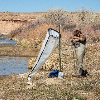
Wildlife Forever will soon install more than a dozen waterless, free-to-use, watercraft cleaning stations at public boat ramps across the Great Lakes area, helping boaters and anglers prevent the spread of zebra mussels and other aquatic invasive species (AIS).
The Michigan DNR and Department of Agriculture and Rural Development encourage those who have eastern hemlock trees on their property to take time this winter to inspect the trees for signs of hemlock woolly adelgid – tiny, soft-bodied insects that consume the trees’ stored nutrients, slowly sucking the life from the trees.
The Utah Division of Wildlife Resources, Utah DNR officers and other partnering agencies worked hard inspecting and decontaminating boats across the state this year. Their primary focus was preventing the spread of quagga mussels and other aquatic invasive species — including Eurasian watermilfoil.
The Iowa Department of Natural Resources (DNR) treated Clear Lake last week with the approved aquatic herbicide, Sonar A.S. to eliminate Eurasian watermilfoil.
The Michigan Department of Agriculture and Rural Development (MDARD) has completed its 2025 spotted lanternfly monitoring efforts, confirming a new population in Jackson County thanks to a report submitted by an attentive Michigander through the Eyes in the Field reporting tool.
At their November meeting, Commissioners with the Florida Fish and Wildlife Conservation Commission (FWC) approved staff recommendations to advertise proposed rule changes for Prohibited green iguanas, including concepts relating to outdoor caging, biosecurity, collection and transport.
Montana’s Aquatic Invasive Species (AIS) team was recently recognized by the Western Regional Panel (WRP) of the Aquatic Nuisance Species Task Force as the 2025 “Best in the West” for its exceptional work preventing the spread of invasive species across the state’s waters.
Cuban bulrush, a fast-spreading invasive aquatic plant, was found in September on Cane Creek Lake within Cane Creek State Park. The species is widespread throughout the lake, and initial treatments have begun to treat the infestation in specific areas.
Governor Ron DeSantis highlighted the success of the Florida Fish and Wildlife Conservation Commission’s (FWC) Python Action Team – Removing Invasive Constrictors (PATRIC) program in achieving record-setting removal numbers of invasive Burmese pythons from Florida’s Everglades. The governor also called on funding for the program to be continued annually to build off of the state’s initial $2 million investment in 2025.
Multiple state parks in southern Michigan will be hosting stewardship workdays, where volunteers are needed to help remove invasive plants that threaten high-quality ecosystems or to collect native wildflower seeds for replanting.
The North Dakota Game and Fish Department, in cooperation with state and federal partners and local stakeholders, have finalized a plan to eradicate zebra mussels from Smishek Lake.
The Iowa Department of Natural Resources (DNR) reminds lake property owners to check their boat and trailers, and docks and lifts, for aquatic invasive species before storing them for the winter.
In recognition of Firewood Month, Michigan’s Invasive Species Program is taking a few minutes to unpack some firewood facts to help you make safe firewood choices to protect Michigan’s trees and forests.
The North Dakota Game and Fish Department has confirmed the presence of invasive zebra mussels in Smishek Lake, Burke County, after detecting zebra mussel veligers in routine plankton tow net samples.
Stiltgrass, a highly invasive annual grass that spreads quickly in disturbed areas, recently was detected in Augusta Creek, Barry and Petersburg state game areas in Michigan. Landowners, land managers and anyone spending time outdoors should look out for stiltgrass and report the location and photos of any suspected plants to the Midwest Invasive Species Information Network.
As waterfowl hunting season begins, the Michigan Invasive Species Program is asking hunters across the state to take extra precautions to prevent the spread of invasive species.
Stiltgrass, a highly invasive annual grass that spreads quickly in disturbed areas, recently was detected in Augusta Creek, Barry and Petersburg state game areas.
Several state parks in southern Michigan will host stewardship workdays, where volunteers are needed to help remove invasive plants that threaten high-quality ecosystems or to collect native wildflower seeds for replanting.
During the Labor Day weekend, Utah DNR officers, Utah Division of Wildlife Resources technicians and personnel from other partner agencies were hard at work inspecting and decontaminating watercraft to prevent quagga mussels and other aquatic invasive species from Lake Powell from spreading to other waterbodies in Utah.