|
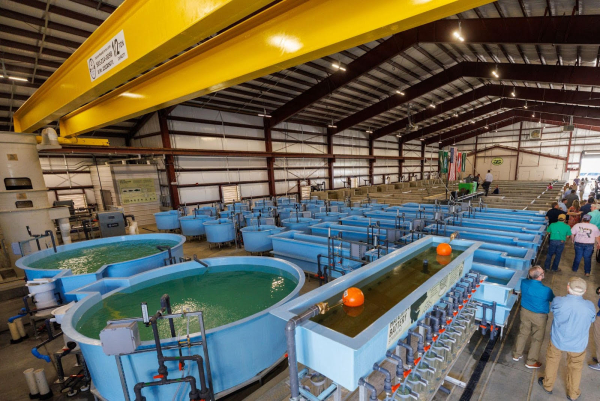
The new facility has 10 concrete raceways, dubbed “hawg troughs” that will be devoted to holding and spawning the fish anglers turn in while they’re here, but they’ll also be used outside of that three- to four-month window.
“The hawg troughs are actually undergoing the last bit of prep work right now,” Miller said. “They’re getting a coat of epoxy paint that will help prevent injuries and infections when the fish are added.”
Miller said the paint will cover the rough texture of the concrete, protecting a fish’s valuable slime coat and scales from abrasions.
“The porous nature of concrete also could harbor bacteria and fungus, and this epoxy paint will seal it, making it much easier for hatchery staff to sterilize the raceways between uses,” Miller said.
Once a fish is collected and brought to the Lonoke hatchery, staff will add it to one of the raceways, depending on where it originated.
“We’ll keep all of these big females separated by watershed,” Miller said. “We may have multiple fish from one or two lakes or river systems, but with the size of the raceways, there shouldn’t be any need to separate them. We have enough room to handle dozens of large females if they come from a few different watersheds.”
Staff will cover the raceways with a screen that allows some light to penetrate but helps prevent disturbance to the fish. They will also monitor water temperature in the raceway, keeping it cold enough to prevent the fish from spawning until they are ready to start the entire batch of Lunkers for the year.
|