
|
Many hunters were unaware of rules related to chronic wasting disease
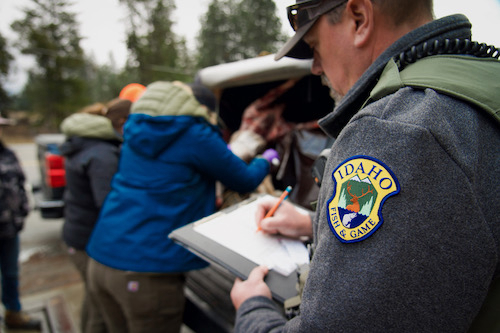
Staff from Idaho Fish and Game’s Panhandle Regional Office operated a check station on Nov. 16 along Interstate 90 near Fourth of July Pass. The purpose of the station was to monitor hunter compliance with Idaho’s wildlife laws and to evaluate whether big game harvested out of state or from an Idaho chronic wasting disease management zone was being transported in accordance with CWD regulations.
Like many other states, Idaho prohibits transporting or importing the spine or brain tissue of deer, elk, and moose harvested in states where CWD has been detected. Nearly all of Idaho’s neighboring states—and most states nationwide—are currently CWD-positive.
While the recent check station represents only a brief snapshot in time, Fish and Game staff observed that compliance with CWD-related transport rules was very low. Chronic wasting disease is a fatal neurological disease that poses a significant risk to Idaho’s big game herds, and following transport rules is one of the most effective ways hunters can help slow its spread.
Hunters who pursue big game outside of Idaho and plan to bring any parts into or through the state are encouraged to review Idaho’s legal transport requirements by visiting the CWD webpage on the Idaho Fish and Game website. Hunters who pursue big game within Idaho’s CWD management zones should also take time to understand the zone-specific rules and requirements before heading into the field.
Idaho law authorizes Fish and Game to operate check stations to enforce wildlife regulations and collect biological data that supports wildlife management. All hunters, anglers and trappers—with or without game—are required to stop when encountering an official Fish and Game check station.
For more news and updates, visit the Panhandle Region Facebook page or contact the Panhandle Regional Office at (208) 769-1414.