
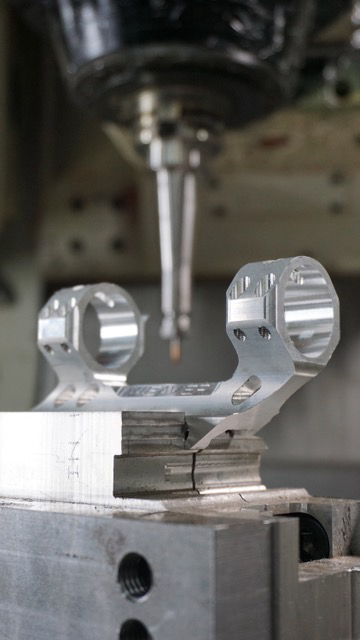
There are products for other manufacturers coming off the machines at Primos Hunting. Some, like this set of scope rings and bases, are for a another member of the Vista brands.
|
Visiting Primos Hunting, it’s hard not to feel as if there’s a foot in two decidedly different manufacturing camps.
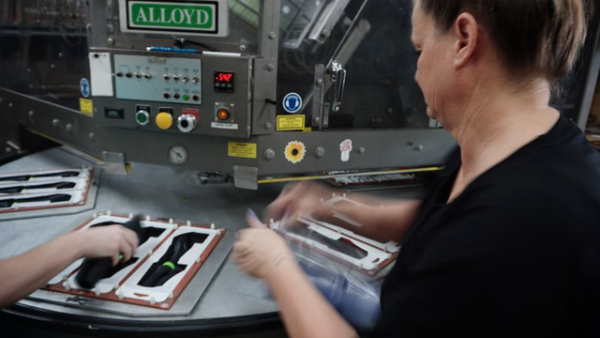
One one side of their factory in rural Mississippi, $600,000 multi-axis machines are cranking out a variety of extremely technical parts. Some are for Primos’ own products; others to help keep the costs of those expensive machines down by keeping them productive. Some include other Vista Outdoor Brands, but not exclusively. As Operations Manager Anthony Foster explained, “we started years ago making OEM parts for others, and we still use that ability to help keep our machines busy.”
The other side is more a reflection of the Primos that Foster and the longtime managers see. There, skilled workers painstakingly hand assemble many of the hunting calls that have made Primos a brand with a dedicated following in the hunting space. Watching a room full of workers assemble tiny components into complicated mouth calls, complete with hand-trimmed diaphragms made of latex or prophylactics makes the entire process seem simple. Trying to assemble one yourself quickly convinces you it’s not something that’s easily mastered.
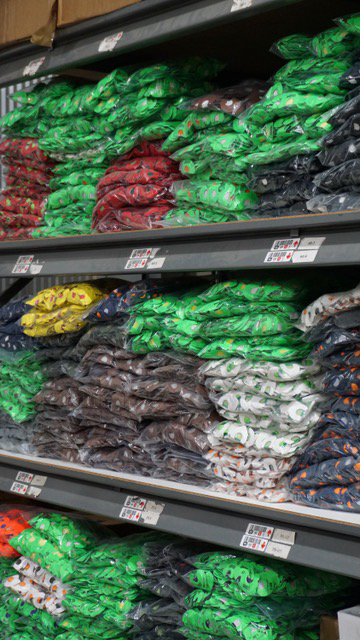
And the room full of workers routinely crank out more than 750,000 of these simple-looking, but ridiculously exacting calls every year.
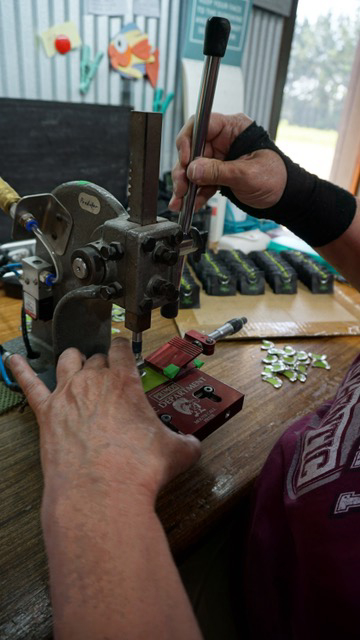
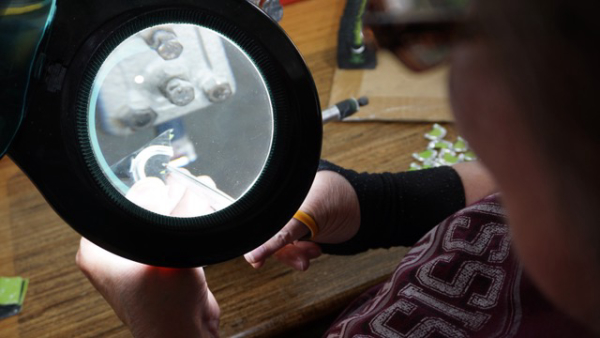
We were invited to try our hands at building the calls. I passed.
But when I was offered the opportunity to assemble and tune an Early Bird box call, one of the less expensive Primos offerings, past experience with basic woodworking made that an offer too-good to pass up. After all, I’d just finished watching their expert “tuners” fine finish, tune, and then assemble a half-dozen exact calls.
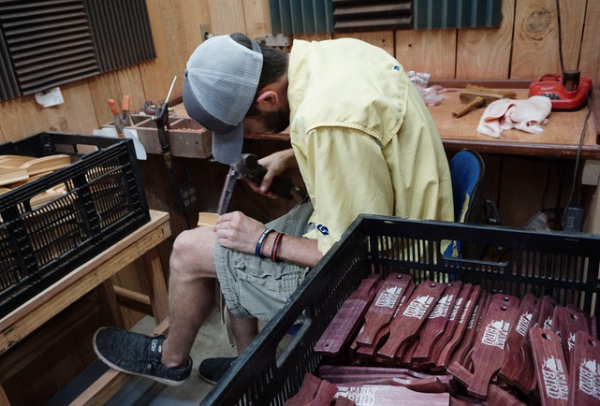
It didn’t look complicated. Then I built one. It wasn’t so awful it went into the scrap pile (they actually do reject calls if the sound’s not right). But it did require some remedial tuning and corrective assembly before they’d allow me to take it out of the shop.
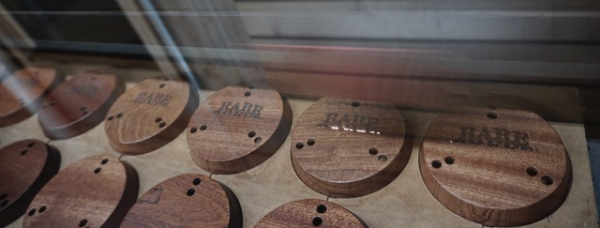
I have it - and a commemorative call they built for our visit. There is a decided difference in the build quality. But the sounds, surprisingly, are very, very similar. My Early Bird was the combined result of beginner’s luck and expert readjustment. The custom shop call they gave me is a combination of artistry and function. Both are very capable of calling turkeys, because they want every call to work- regardless of price.
That every one matters thinking is ingrained in family-owned businesses. It’s one reason the family-owned businesses still survive-and thrive- in an increasingly commoditized economy.
At Primos, that family-owned culture is obvious, despite the fact the company has changed hands.
The workers feel valued and appreciated. They repay that by putting pride into every product that is assembled there, whether it’s a pricey, highly-customized box call, or a $10 retail mouth call destined for an end cap in Walmart.
It’s what Will Primos described as their “promise” to other Primos users. The people at Primos, including Will and Jimmy Primos, use the same products they make to sell to others.
Their customers know- and appreciate that- he told me, and they regularly send in everything from updates on hunts to suggestions for tweaks to products. “We are,” he said, “like a big family -and that’s the way we’ve always operated. We are our customers, too.
But Primos isn’t a family-owned business anymore. Today, it’s a smaller part of the conglomeration of outdoor brands that makeup Vista Outdoors (NYSE: VSTO).
Recognition of that is something the former owners and current managers recognize, even while they admit they “fight” to maintain the attitudes that have created the Primos aura.
“We try to stay as far away from the corporate issues as possible,” Foster told me, “we appreciate the things they bring as a big company, but we try - hard- to maintain our culture and traditions. We want to make the best products possible for our customers. They’re our friends, and we want them to have the same quality gear we use.”
That, in an era when many corporations seem more intent on buying market share and then recasting it in their idea of an efficient company, isn’t without its challenges. Fortunately, Vista appears to be appreciative of that Primos ethos and supportive of their independence.
Still, spending time watching the workers feed the computerized machinery brought home the fact that the accessories business is a business of volume.
Watching the workers carefully hand assemble, test/tune and then hand-pack their products reminded me that it’s important not to grow yourself out of touch with your customers.
That sounds like a very delicate balancing act. Primos appears to have the balance figured out.
As always, we’ll keep you posted.
— Jim Shepherd