
In Part 1, I outlined some of the general gear we used and appreciated during my daughter’s backcountry sheep hunt this fall. Part 2 will focus on gear that was particularly useful during our overnight treks.
I’ve got plenty of camping under my belt—out of the back of my car—and the idea of carrying everything I needed in a pack (or in the panniers on a horse during our pre-season scouting drop camp) was extremely daunting.
Our gear for my daughter’s sheep hunt had to be light, durable, and we had to know exactly how much we needed for several nights completely off the grid. This was a steep (and somewhat expensive) on-ramp—the gear we chose certainly weren’t the only options on the market but in some cases our choices became a balance of cost and expected long term use.
Here’s a rundown of some of what we learned along the way.
A Good Night’s Sleep
Sleep is precious to me and in an experience where I knew we would be using significant energy in our daytime activities, getting a good night’s sleep was important. A tent, sleeping pad, and sleeping bag had to not take up too much space in our packs and be light enough that our packs would be manageable on a 4+ mile hike.
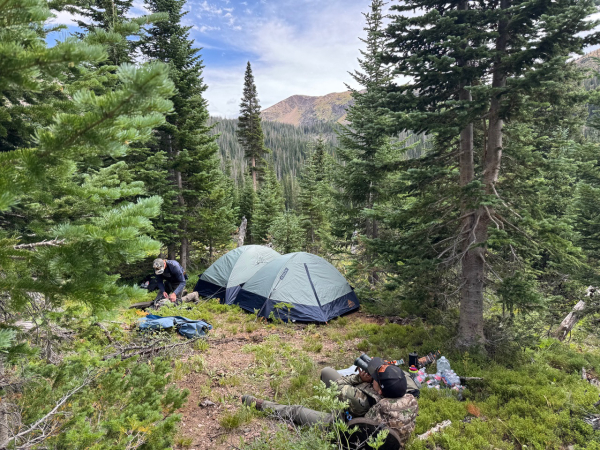
For our family of three, we got two Kelty Late Start 2-person tents. This wasn’t the most high-end tent, but it only weighed a little over 4 pounds and protected us well even in an unexpected nighttime rainstorm. Lightweight hunting gear manufacturers like KUIU and Stone Glacier sell outstanding tents as well but they are a bit more high end. A Hunters Tarp by Caribou Gear provided a very lightweight additional cover for our gear that didn’t fit into the tent.
A sleeping pad is essential, but my previous tent camping experience had been with bulky pads that didn’t really block the cold ground temps and weren’t very comfortable. Getting something that would allow me to sleep on very uneven terrain and wouldn’t take up much room in the pack was key. We each took different directions on this.
I bought a NEMO Equipment Tensor All-Season inflatable pad which was light and small while still providing a 3.5 inch thick cushion that included a Thermal Mirror film to help block the ground temperature. At only 1 pound and just 10 inches long and 4 inches in diameter when packed, it took up very little space and was easily inflated with the included Vortex pump sack.
My husband has a Therm-A-Rest NeoAir XLite pad and my daughter got a Klymit Static V2 pad and these worked well for them. We each had an inflatable pillow (mine was the Sea to Summit Aeros Ultralight) that were extremely tiny when packed and provided good comfort.
My sleeping bag was also a key purchase as I’m typically a cold sleeper and had found that my old sleeping bag didn’t handle the cold mountain air well. My daughter and I each got a Mountain Hardwear Women’s Bishop Pass down mummy sack, mine was rated to 15 degrees Fahrenheit (15F) but my daughter got the 0F version since she’ll likely use this bag in Montana where temps during hunting season can get very cold.
I closed the bag over my head leaving a relatively small hole to breathe through—this kept me from getting a cold nose and cheeks, something that often wakes me up during camping trips. The bag also has what my daughter and I jokingly referred to as a “dewlap”— what the manufacturer refers to as a shaped draft collar—a flap that hangs down around the opening to create an additional barrier preventing cold air from getting in the bag when it was fully zipped and cinched down.
This made a huge difference in maintaining body heat and when coupled with the extra insulation found in the women’s version of this bag, we both stayed warm and comfortable. The bag weighs only about 3 pounds and with the included compression sack, it didn’t take too much space in our packs.
I’d also like to throw a shout out to our KUIU apparel used during the scouting and hunting trips. We covered a wide range of temperatures at various times of day and elevation, so clothing that properly managed body temperature was key. KUIU has done extensive testing on fabrics that wick sweat, are breathable, and provide outstanding insulation.
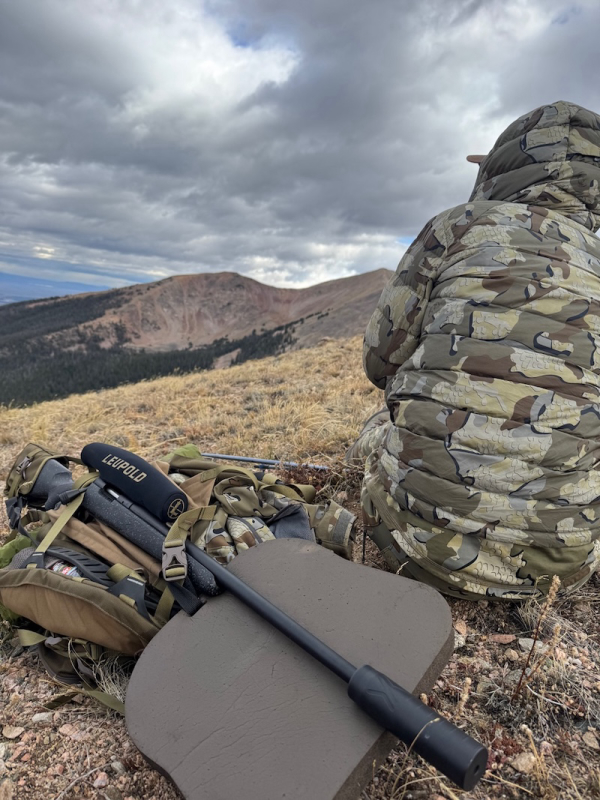
These clothes are also extremely lightweight and packable making them even more valuable in the backcountry. The Valo pattern we have was perfect for the different habitats we found at various elevations and during changing seasons—and my daughter and I love the women’s line that fits us extremely well.
For the Camp
Sheep hunting and backcountry hikes are energy intensive and everything we needed to eat and the gear to cook it with had to fit in our packs. We bought Peak Refuel's tasty freeze-dried meals at the Western Hunting & Conservation Expo and actually enjoyed our backcountry camping food.
There are plenty of flavor varieties and options for dinners and breakfasts that pack plenty of protein and are ready in about 10 minutes after adding boiling water. We found that although the bags say they have two servings, we each needed one bag per meal because we burned so many calories in daily activities.
We also appreciated Wilderness Athlete’s Hydrate and Recover packets to restore electrolytes, and their Pack Out Bar and Bites for high protein energy snacks on the trail.
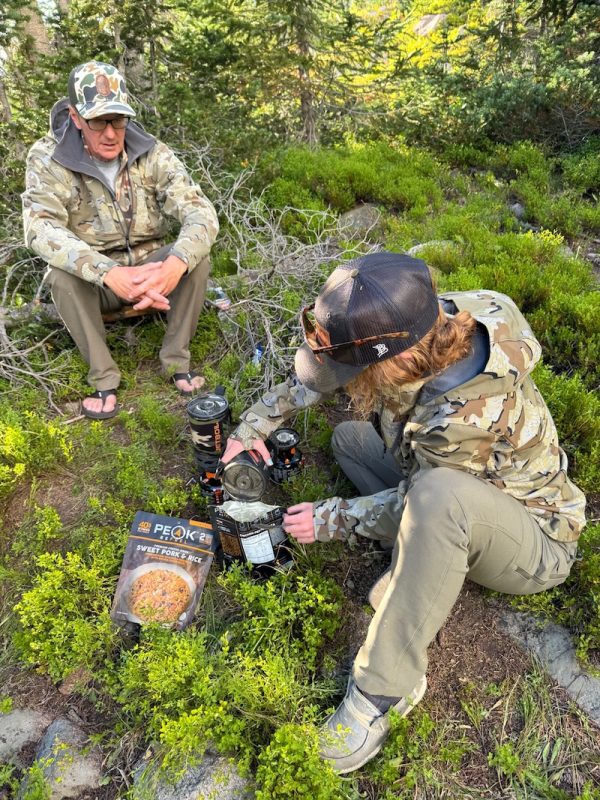
To heat the water necessary for the freeze-dried meals and our morning coffee, we depended on a Jet Boil Flash 1.0 L Fast Boil System. These tiny, lightweight powerhouses take up very little space in the pack, and when you wake up to freezing temps (yes, even in September at that elevation), getting a hot drink and meal in your system fast is a simple luxury. Jet Boil improved their original version last year with a new knob turn ignition system designed to be more durable and easier to use.
For our first trip we burdened the horses’ panniers with bottles of water rather than carrying a water filtration system. That wasn’t an option on our backpack trips, so we got a Sawyer 1-gallon gravity system, which was a very lightweight and relatively inexpensive option.
While it generally worked, there was some leaking through the filter tubing and even with a gallon sized bag, it required many trips back and forth to the creek. More expensive systems might work better but this one served our needs.
We also learned it’s a challenge to find relatively flat surfaces for the Jet Boil and our coffee cups. Crazy Creek’s new foldable Pack Table—designed, manufactured, and assembled in Montana—solved this problem. At 12” square and adjustable from 5” to 8” tall it worked well with our Hex Camp Chairs. The table packs down to 6” square and two inches thick when folded and weighs 19 ounces making it small enough to fit in my pack.
Another absolute camp essential in this time of technology is a way to charge electronics when the nearest wall outlet is more than 5 miles away. We used my onX Hunt Elite Membership to evaluate terrain, determine reasonable routes to climb to glassing locations, and for so many other uses. However, ensuring our phones didn’t die (and of course our smart watches that tracked the details of our hikes) was critical.
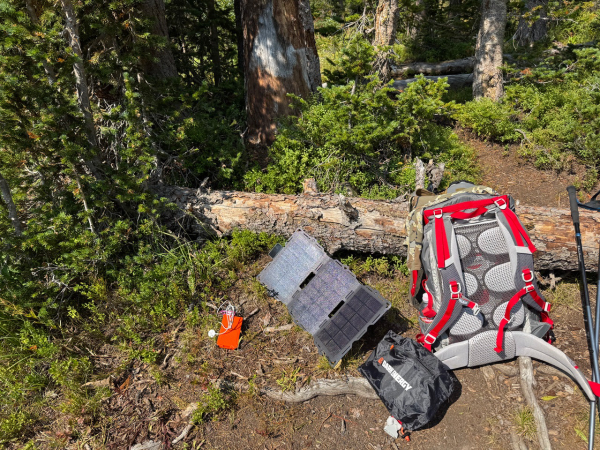
The cold air can sap many lithium battery packs, but Dark Energy has a Backcountry Bundle that was a game changer. The lightweight, flexible 18W Spectre solar panels charged the Poseidon Pro battery (sold separately or each a bit cheaper as part of the bundle) in our sunny campsite during the day with the Poseidon plugged in. When we returned the battery pack was full and charged our phones and watches overnight.
One tip for tech: make sure to download offline maps in onX to access your content when you get out of cell service, then turn on airplane mode so that the phone isn’t constantly seeking the nearest tower. This helps to reduce the battery drain enough to get you through the day.
Other Seemingly Minor Necessities
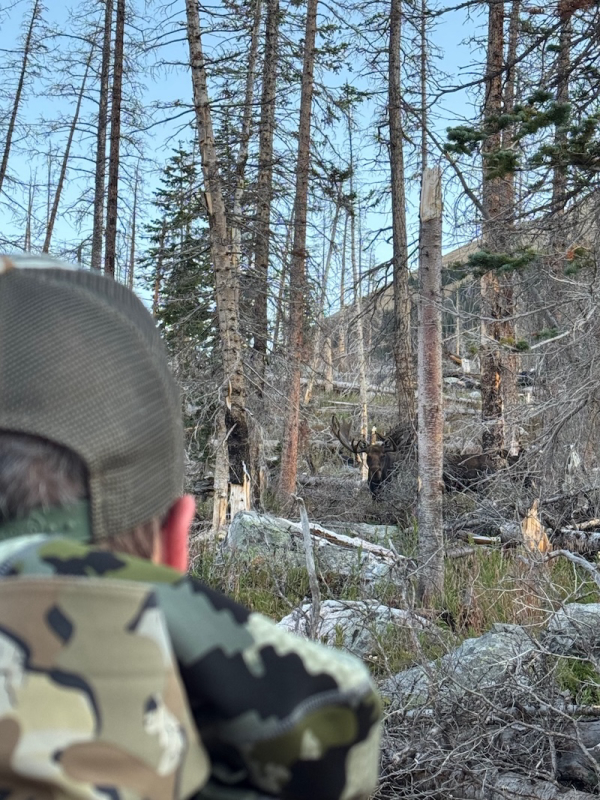
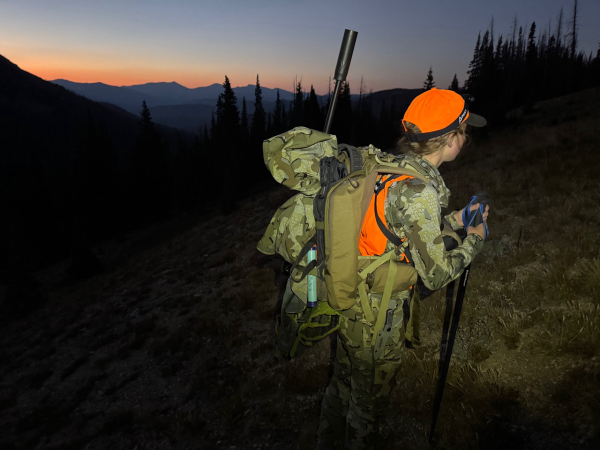
We had a couple other small pieces of gear that make the list of must haves. We often hiked in well before daylight (and met many a moose along the way) and cooked in the dark in camp, making a good headlamp or flashlight critical.
My daughter had a PEAX Equipment Backcountry Duo headlamp and I used a Coast RL35R headlamp. Both had rechargeable batteries and offered numerous levels of light as well as red and green light options (the Coast also has blue). My Coast was admittedly overkill—I didn’t really need the red safety light in the back (though it would be fantastic for nighttime road biking) and the voice activated light was a cool option but not something I used when trying to be quiet—but the light up to 1,100 lumens at full strength was perfectly targeted for hiking.
My husband used and liked the 5.11 Tactical Response XR1 headlamp which can also be removed as a standalone flashlight. I also loved my Coast KL30R mini flashlight that packed up to 500 lumens in directed light and a bright area light on the side that was very helpful in the tent.
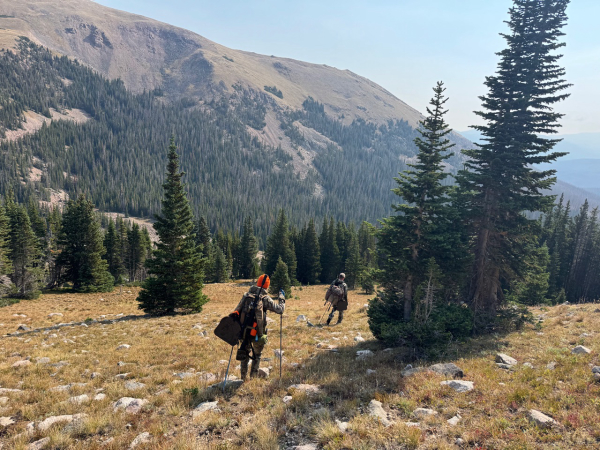
Finally, our Black Diamond Distance Z collapsible trekking poles were essential when maneuvering through steep country but also to help us stabilize when fatigue and a heavy pack set in—honestly, they saved each of us from potentially serious injuries at various times throughout our hunt. These poles are extremely lightweight and easy to fold and store in a side pocket of the pack.
After over 120 miles of hiking and many hours and days in the field, we learned a lot about how capable we are and what gear helped the most along the way. What we didn’t do is find a mature ram, so my daughter’s rare tag went unfilled. But those hours and days provided memories and experiences that we will never lose, and that’s what truly makes a hunt successful.
– Jodi Stemler